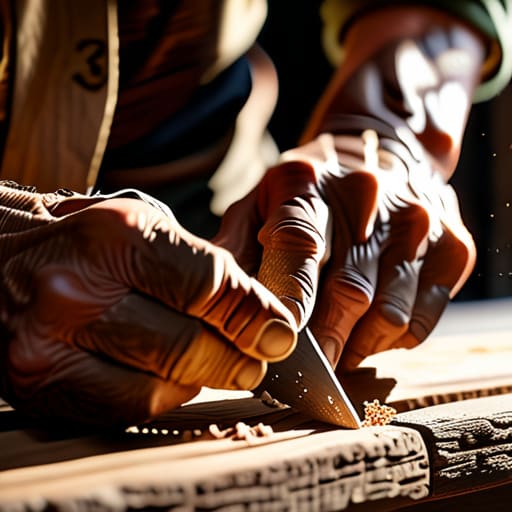
Knowledge That Cannot Be Written Down
I was clearing out a corner of the studio last Tuesday when I tripped over a stack of rejected joinery samples from 2004—oak tenons that were a fraction too proud, held together by nothing but hope and a prayer. Looking at them, I realized that people always talk about the death of tradition as if it’s some grand, sweeping tragedy of lost cultural heritage or “artisan knowledge.” It’s a sanitized, academic way of looking at it. The truth is much more visceral and much more personal; what we lose when a craft disappears isn’t just a technique or a finished object, but the ghost of the alternative path. We lose the friction of the struggle, that specific, messy moment where a maker almost chose a different way and had to fight their material to make the right call.
I’m not here to give you a lecture on the importance of heritage or sell you on some romanticized idea of the “simple life.” I want to talk about the actual, gritty reality of how constraint shapes intention. Over the next few sections, I’ll be sharing what I’ve learned from twenty years of making things—the real, unvarnished cost of losing the hands that know how to fail beautifully.
The Ghost of the Alternative Path What We Lose When a Craft Disappears
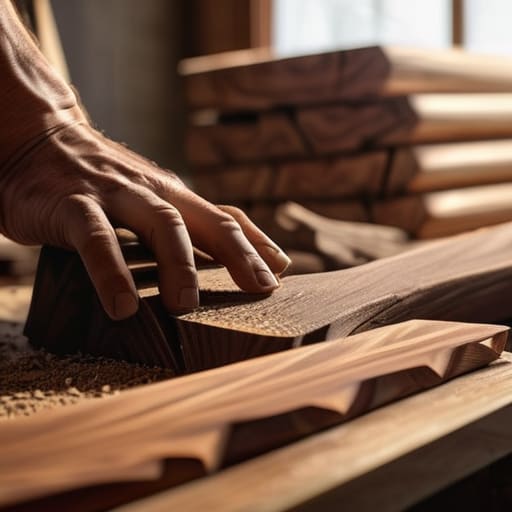
I was looking at a stack of rejected walnut chair legs in the corner of my studio this morning—each one marked with a Sharpie note about a failed bevel or a stubborn grain. They are my favorite things. They represent the friction between what I intended and what the wood demanded. When we talk about the erosion of traditional skills, we often focus on the end product—the empty shelf where a hand-turned bowl should be. But the real tragedy is the disappearance of that internal dialogue, the split-second hesitation where a maker weighs a tool against a texture.
When a lineage of making is broken, we aren’t just losing a set of movements; we are losing the intergenerational skill transfer that lives in the hands. It’s a specific kind of intelligence that can’t be downloaded or simulated. It’s the ability to feel the resistance of a chisel or the exact moment a joint becomes snug. Without that physical memory, we lose the ability to navigate the “almost.” We trade the messy, beautiful complexity of human error for a sterilized, predictable perfection that has no soul to call its own.
The Silent Erosion of Traditional Skills and Human Intuition
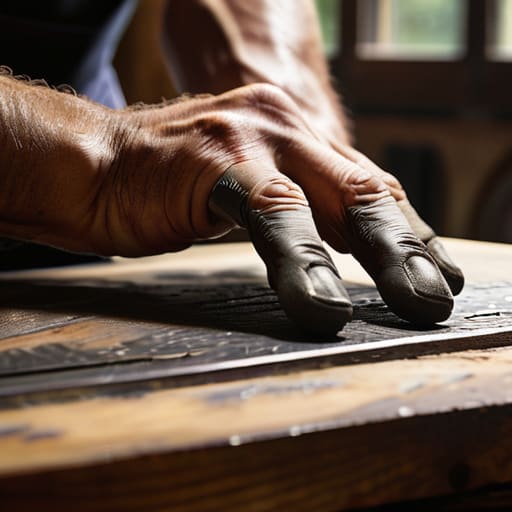
It isn’t just the tools that vanish; it’s the way a person’s hands learn to argue with the material. When I sit at my letterpress, I’m not just moving ink; I’m navigating the resistance of the paper and the temperamental nature of the metal. This is the value of manual dexterity—a kind of intelligence that lives in the fingertips rather than the prefrontal cortex. When we lose the lineage of a specific joinery or a particular way of tempering steel, we aren’t just losing a method. We are losing the ability to feel when a piece is correct.
This erosion of traditional skills creates a hollow kind of efficiency. In a production line, everything is optimized to eliminate doubt, but doubt is where the soul of a piece resides. Without the intergenerational skill transfer that once happened in dusty workshops, we lose the subtle, unwritten corrections passed from master to apprentice. We trade a deep, intuitive understanding of physics and grain for a standardized perfection that feels strangely lifeless. We aren’t just losing objects; we are losing the human instinct to respond to the unexpected.
When the Hand Forgets the Vanishing Value of Manual Dexterity
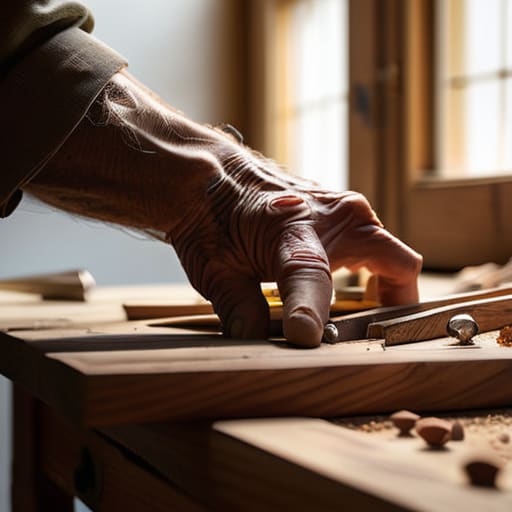
I spent yesterday afternoon in the studio, staring at a pile of rejected walnut joinery samples. They are tucked away in the corner, a graveyard of “almosts,” because I can’t bring myself to throw away the evidence of a struggle. There is a specific kind of intelligence that lives in the fingertips, a tactile feedback loop that a CAD program simply cannot simulate. When we talk about the loss of artisanal techniques, we aren’t just talking about losing a way to make a chair; we are talking about the atrophy of a sensory language.
If a designer only interacts with a world of pixels and perfect vectors, they lose the ability to “feel” a material’s resistance. The value of manual dexterity isn’t found in the speed of production, but in those micro-adjustments—the way a chisel bites slightly differently when the grain shifts unexpectedly. Without that physical dialogue, we stop being makers and start being mere operators. We lose the ability to negotiate with the physical world, trading the nuanced wisdom of the hand for the sterile, predictable efficiency of the machine.
Fractured Lineage and the Failure of Intergenerational Skill Transfer
I spent yesterday afternoon in my workshop, surrounded by the usual graveyard of rejected joinery. There is a specific kind of silence that settles in when you realize a certain way of working has no successor. In my own life, I see it in the way apprenticeships have shifted from years of tactile observation to a few hours of watching a YouTube tutorial. We are witnessing a profound breakdown in intergenerational skill transfer, where the nuance of a chisel’s angle or the specific tension of a hand-plane isn’t being passed down through muscle memory, but is instead being lost to the ether.
When a master craftsman dies without a successor, we don’t just lose a person; we lose a library of unwritten rules. It isn’t just about the loss of artisanal techniques in a technical sense, but the severance of a living chain. This isn’t a clean break; it’s a slow, fraying dissolution of how we understand material. Without that continuous, physical dialogue between teacher and student, we are left with a hollowed-out version of history—a collection of objects that look right, but lack the soul of a lineage that only comes from a thousand hands refining a single, difficult motion.
Tracing the Scar the Loss of Artisanal Techniques and Nuance
I was looking at a rejected walnut chair leg in my studio yesterday—a piece I discarded because the grain direction fought my chisel. It’s a failure, technically, but it’s a failure with a specific, legible history. When we talk about the loss of artisanal techniques, we often treat it like a library burning down, a clean and tragic erasure. But in practice, it’s much messier. It’s the slow, quiet disappearance of the micro-adjustments—the way a woodworker feels the resistance of a knot through the handle of a plane, or how a printer senses the exact moment the ink is too heavy for the paper.
These aren’t just “skills” you can download from a tutorial; they are somatic memories. When these nuances vanish, we aren’t just losing a method of production; we are witnessing the erosion of traditional skills that once allowed for a dialogue between the maker and the material. Without that tactile feedback loop, the object becomes a monologue—a predictable, sterile thing that tells you nothing about the struggle required to bring it into being. We lose the ability to respect the friction that makes something real.
Preservation of Intangible Heritage Saving the Makers Near Misses
We often mistake preservation for the hoarding of finished things—museum cases filled with polished mahogany or perfectly set type. But if we are serious about the preservation of intangible heritage, we have to look at the scrap pile instead. My studio is a graveyard of “almosts.” There is a chair in the corner with a leg angle that was too aggressive, and a set of letterpress blocks that failed because the ink didn’t bite the way I intended. These aren’t failures; they are the records of a living thought process. When a craft dies, we don’t just lose the ability to make the object; we lose the ability to understand the logic of the mistake.
To save a craft, we must protect the space where the maker struggles. If we only teach the “correct” way through sterilized digital models, we bypass the essential friction that builds true expertise. We need to document the hesitation, the pivot, and the near-misses that define a master’s intuition. Without that, the erosion of traditional skills becomes total, leaving us with a world of perfect, soulless repetitions that never once dared to go the other way.
Molding Cultural Identity and Craftsmanship in a Frictionless Age
We live in an era that worships the frictionless. We want the chair, the table, the bowl to appear as if by magic, devoid of the struggle that birthed it. But there is a subtle danger in this seamlessness; when we remove the resistance of the material, we inadvertently strip away the markers of our own history. Cultural identity and craftsmanship are not found in the perfection of a mass-produced plastic mold, but in the specific, localized ways a maker negotiates with wood, stone, or clay. These objects serve as a physical shorthand for who we were and how we lived.
When we prioritize convenience over the tactile, we witness a slow erosion of traditional skills that once anchored communities to their landscapes. A region defined by its specific joinery or its unique pottery becomes just another node in a global supply chain. We aren’t just losing products; we are losing the ability to recognize ourselves in the things we own. Without that friction—that tiny, stubborn tension between the hand and the tool—we risk drifting into a world that is perfectly functional, yet entirely anonymous.
The Cost of the Frictionless Path
When a craft vanishes, we aren’t just losing a way to make a chair or a bowl; we are losing the specific, beautiful friction of a human being struggling against a material to find the right answer. We lose the history of the mistakes that were almost made, and without those near-misses, everything we produce starts to feel like it was merely calculated, rather than actually decided.
Jonathan Marin
The Weight of the Unmade
We have spent this time looking at the wreckage left behind when a skill evaporates. It isn’t just about the loss of a specific tool or a particular way of joining wood; it is the erosion of the human intuition that lives in the gap between a plan and its execution. When we lose these crafts, we lose the lineage of trial and error, the fractured connections between generations, and that subtle, tactile nuance that no algorithm can replicate. We are left with a world of polished, frictionless objects that tell us nothing about the struggle required to bring them into being. We are trading the depth of the maker’s journey for the mere convenience of the finished product.
Ultimately, my hope isn’t that we return to a pre-industrial past, but that we learn to value the friction again. I look at the pile of rejected prototypes in the corner of my studio—the ones with the handwritten notes about why a joint failed or a curve felt wrong—and I realize that those failures are where the soul resides. To preserve a craft is to preserve the right to make a mistake, to pivot, and to choose the difficult path over the easy one. Let us not just consume what is available; let us seek out the objects that carry the weight of a human decision, for that is where the true story of our world is written.
