
Practice Changes What You Can See
I was staring at a stack of rejected walnut joinery in the corner of my studio—each piece tagged with a handwritten note about a failed angle or a miscalculated tolerance—when it hit me how much we misinterpret the concept of skill. People love to talk about “flow states” or some mystical, ethereal awakening, but that’s just fluff. They treat it like a sudden lightbulb moment, when in reality, what practice does to perception is much more granular and exhausting. It isn’t about seeing more; it’s about seeing the specific, tiny failures that most people would walk right past without a second thought.
I’m not here to sell you on some grand spiritual journey or a shortcut to mastery. Instead, I want to talk about the uncomfortable shift that happens when your eyes finally stop seeing “a chair” and start seeing the tension in a single tenon. I’ll be sharing what I’ve learned from twenty years of making things, focusing on the hard-won ability to recognize the decisions that almost went wrong. This isn’t about inspiration; it’s about the quiet, disciplined way your brain begins to map the constraints of the physical world.
The Near Miss the Beautiful Friction of What Practice Does to Perception
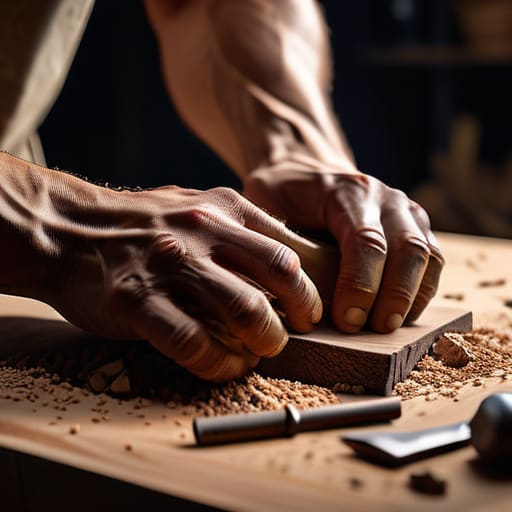
I spent the better part of last Tuesday staring at a joint that refused to seat properly. It wasn’t a failure of measurement, but a failure of seeing. In my studio, there’s a shelf of “ghosts”—those rejected prototypes I keep, each tagged with a note about where the logic failed. Looking at them now, I realize that true skill isn’t about getting it right the first time; it’s about the cognitive refinement through repetition that allows you to sense the error before the wood even touches the blade.
When you’re starting out, you see the object as a whole—a chair, a table, a finished thing. But practice forces a kind of splintering. You begin to notice the tension in a grain pattern or the slight, off-kilter weight of a dowel. It’s a form of sensory training that feels less like inspiration and more like a slow, grinding calibration. You aren’t just learning a craft; you are retraining your brain to recognize the split-second decisions that nearly went the other way. It’s in that friction, that narrow gap between the choice you made and the one you almost made, where the real work happens.
Cognitive Refinement Through Repetition Choosing the Harder Path
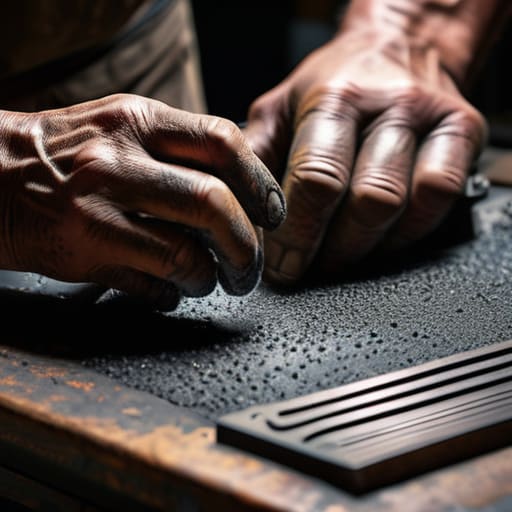
There is a specific kind of exhaustion that comes from doing the same thing for the thousandth time, but it isn’t the fatigue of boredom. It’s more like a sharpening. When I’m at my letterpress, setting type for the fifth time to get a single line of text just right, I’m not just repeating a motion; I’m engaging in a form of cognitive refinement through repetition. You begin to bypass the obvious, easy solutions that your brain offers up as shortcuts. Instead, the repetition forces you to sit with the friction of the material until the “correct” way to handle it stops being a thought and starts being an instinct.
This is where the real work of skill acquisition and sensory acuity happens. You stop seeing a piece of oak as a slab of wood and start seeing the tension in the grain that will fight your chisel. It’s a subtle shift in how you process information. You aren’t just looking anymore; you are anticipating. You learn to value the harder path—the one that requires more precision and more patience—because you finally have the sensory vocabulary to understand why the easy way would have failed the design.
Neuroplasticity and Sensory Training the Lines We Almost Didnt Draw
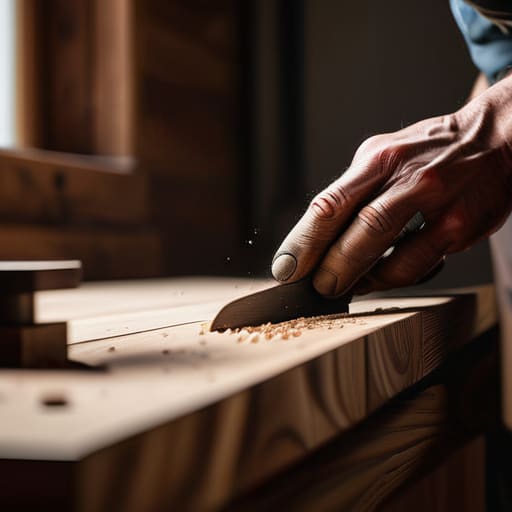
I spent three weeks last month trying to dial in the tension on a new joinery detail for a walnut sideboard. In my studio, there’s a shelf of “failures”—pieces where the grain didn’t cooperate or the angle was off by a fraction of a degree. Looking at them now, I realize those mistakes weren’t just errors; they were the physical manifestation of neuroplasticity and sensory training in real-time. Your brain isn’t just memorizing a movement; it is remapping how it interprets the resistance of the wood against the chisel.
When you work with your hands long enough, the gap between seeing a line and feeling its necessity begins to close. This isn’t some mystical epiphany; it’s a matter of skill acquisition and sensory acuity. You start to sense the structural tension before the tool even touches the surface. You aren’t just reacting to the material anymore; you are anticipating the moment the grain might fight back. It’s in that microscopic window of hesitation—the moment you decide to adjust your grip or change your angle—where the real design actually happens.
The Tension of Perceptual Learning Mechanisms and Intentional Error
There is a specific kind of frustration that comes with trying to master a new medium, whether it’s the grain of a piece of walnut or the delicate pressure of a letterpress chase. You expect progress to be a steady climb, but instead, it feels like a series of stumbles. This is where the actual work happens. We often mistake mistakes for failures, but in reality, they are the primary drivers of perceptual learning mechanisms. When I miss a joint by a fraction of a millimeter, my brain isn’t just recording a mistake; it is recalibrating how I interpret depth and resistance.
It is the tension between what I intended to do and the error I actually made that forces a deeper level of engagement. This isn’t about mindless repetition; it’s about attention control and sensory processing. You have to lean into the friction of the error to understand why it happened. If everything went perfectly every time, I would never learn to see the subtle warnings the material was giving me. The error is the teacher that demands you look closer.
Attention Control and Sensory Processing Where the Vision Almost Faltered
I remember a week in my early thirties, working on a walnut dining table that felt fundamentally “off.” I couldn’t name the problem, but my eyes kept snagging on the joinery. It wasn’t a structural failure; it was a failure of focus. I was looking at the table as a whole, a singular object, rather than a collection of intentional intersections. That’s the trap of the novice: you see the forest, but you miss the way the light hits the bark. Through years of repetitive work, I’ve learned that attention control and sensory processing aren’t just academic terms; they are the actual mechanics of survival in a studio.
When you’re deep into the process of skill acquisition and sensory acuity, you stop reacting to what you expect to see and start responding to what is actually there. It’s a quiet, almost exhausting sort of vigilance. You begin to notice the micro-deviations—the way a grain pattern might fight a bevel, or the slight, almost imperceptible shudder in a hand plane. You realize that the vision didn’t just falter because of a lack of talent, but because the mind was too noisy to hear what the material was saying.
Skill Acquisition and Sensory Acuity Mastering the Almost Wrong Move
I spent most of last Tuesday staring at a joint that refused to sit flush, a tiny gap that felt like a canyon under my calipers. In my studio, there is a shelf of these failures—the “almost-rights.” When I first started designing furniture, I thought skill was about the steady hand or the perfect measurement. I was wrong. Real skill acquisition and sensory acuity are less about the execution and more about the pre-emptive correction. It is that split-second internal alarm that goes off before your chisel even touches the wood, telling you that the grain is about to fight you.
This isn’t some abstract concept of mindfulness; it’s a physical, almost violent sharpening of the senses. Through cognitive refinement through repetition, your brain stops processing the tool and the material as two separate entities. You begin to feel the resistance in your elbow before your eyes even register the change in texture. You aren’t just learning how to cut; you are learning to inhabit the narrow margin between a deliberate stroke and a clumsy mistake. It is the mastery of the move you almost didn’t make.
Mindfulness and Perceptual Awareness Finding Truth in the Narrow Margin
I spent most of my twenties thinking that “being present” was something you did on a yoga mat, not something you did while trying to figure out why a walnut veneer was splitting under a router bit. But after years of staring at the same joinery, you realize that mindfulness and perceptual awareness aren’t about peace; they are about a certain kind of ruthless clarity. It’s the ability to sit with a piece of wood—or a piece of type in my press—and actually hear what it’s telling you before you force your will upon it.
When you reach this level of focus, you stop fighting the material and start negotiating with it. You begin to notice the microscopic deviations that most people would miss, the tiny tremors in your hand or the subtle change in the grain’s resistance. This isn’t some mystical state; it is the result of skill acquisition and sensory acuity being honed through thousands of small, often frustrating, repetitions. You aren’t just looking anymore; you are witnessing the exact moment a decision moves from “good enough” to right.
The Ghost in the Joinery
Practice isn’t about reaching a point where you stop making mistakes; it’s about developing the kind of vision that lets you see the mistake while it’s still happening, in that microscopic gap between the impulse and the act.
Jonathan Marin
The Ghost in the Machine
Looking back at the stack of rejected prototypes in the corner of my studio, I realize they aren’t just failures; they are the map of how I learned to see. We’ve traced how practice isn’t about achieving a flawless, automated state, but about refining the internal friction between what we intend and what we actually perceive. It is the cumulative weight of those near-misses—the sensory sharpening, the cognitive discipline, and the ability to sit within the tension of an error—that eventually builds a professional’s eye. We don’t just learn to do the work; we learn to see the invisible boundaries where a good decision almost became a mediocre one.
In the end, the goal isn’t to reach a point where you no longer make mistakes, but to reach a point where you can feel the deviation the moment it happens. Whether you are pulling a lever on a letterpress or adjusting the joinery on a walnut chair, the mastery lies in that razor-thin margin of error. Don’t fear the iterations that don’t quite land. Those “almost-rights” are the only way we truly learn to navigate the world. The beauty of the finished piece isn’t found in its perfection, but in the quiet strength of the choices that survived the struggle.
