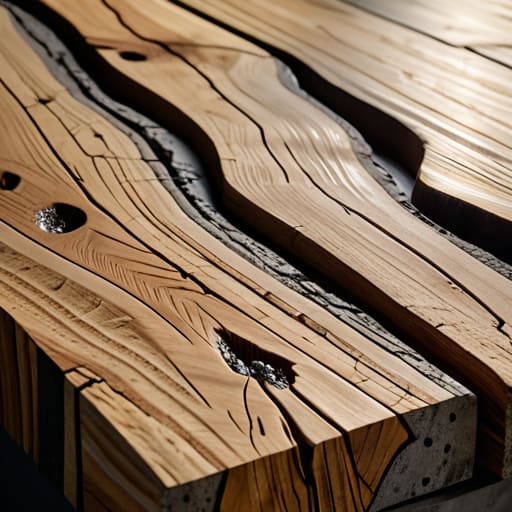
Letting a Material Be What It Is
I was digging through a box of rejected walnut joinery prototypes in my studio last Tuesday—one of those piles I can’t quite bring myself to throw away—when I realized how much we’ve been lied to about what it means to be authentic. There’s this pervasive, expensive myth in the design world that how to use material honestly requires some sort of spiritual communion with the grain or a massive budget for rare, exotic hardwoods. It’s nonsense. We’ve turned “honesty” into a luxury marketing term, a way to justify a price tag, rather than treating it as the series of difficult compromises it actually is.
I’m not here to give you a lecture on the soul of oak or any other lofty, unprovable nonsense. Instead, I want to talk about the friction—the actual, physical resistance you encounter when a material refuses to do what you want it to do. I’m going to share what I’ve learned from twenty years of watching wood warp and metal fatigue, focusing on the decisions that nearly went the other way. We’ll look at how to respect the constraints of your medium without letting them turn your work into something boring or predictable.
The Ghost of the Alternative Why Decisions Define Form
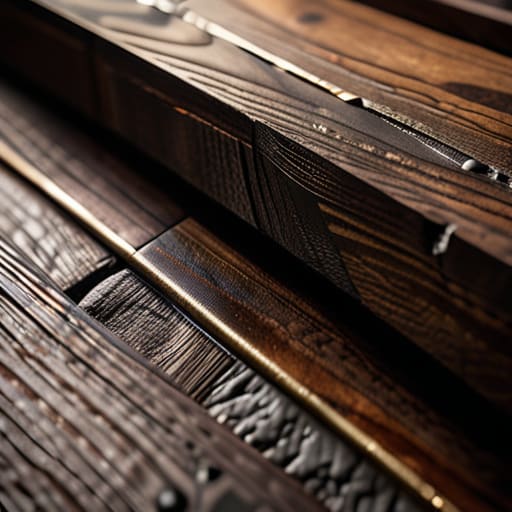
I have a shelf in the back of my studio, tucked behind a stack of old letterpress type, that serves as a graveyard for “almosts.” There is a walnut chair leg that was supposed to be tapered but ended up blunt, and a brass inlay that I initially thought should be polished to a mirror sheen before I realized it would look like a cheap imitation of something else. These pieces aren’t failures; they are the evidence of the fork in the road. When we talk about structural integrity and aesthetics, we often focus on the final silhouette, but the real soul of the object lives in that tension between what the material wanted to do and what we forced it to do.
To design with intention is to acknowledge the ghost of the path not taken. If I choose a heavy, textured oak over a sleek, veneered alternative, I am making a commitment to the truth to materials principle. It isn’t just about being “real”; it’s about the weight of the decision. When you avoid deceptive cladding and instead let the grain or the weld tell the story, you aren’t just building a product—you are documenting a choice.
Embracing the Truth to Materials Principle in Every Grain
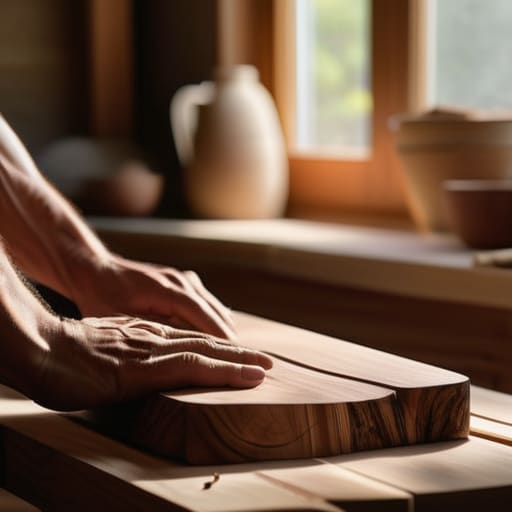
I spent most of last Tuesday staring at a slab of walnut that refused to behave. In my studio, there’s a shelf of “failures”—pieces where I tried to force a grain pattern to follow a curve it had no interest in honoring. I keep them because they are the most honest things I own. They remind me that the truth to materials principle isn’t some lofty, academic concept you find in a textbook; it’s a physical negotiation. When you stop trying to mask the wood’s natural tendency to split or twist, you stop fighting the object and start collaborating with it.
It’s easy to hide behind a veneer or a thick coat of synthetic lacquer to smooth over a mistake, but that’s just avoiding deceptive cladding. There is a profound, quiet dignity in letting a joint show its work or allowing a metal surface to develop a patina that tells the story of its use. When we prioritize structural integrity and aesthetics as a single, unified goal, we move away from mere decoration and toward something much more permanent. The object doesn’t just look right; it feels inevitable.
How to Use Material Honestly Without Fearing the Raw
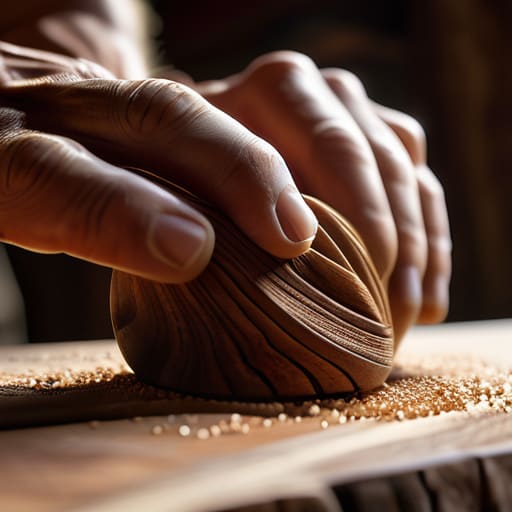
I spent most of last Tuesday staring at a slab of walnut that had a knot so aggressive it practically demanded its own zip code. My instinct, honed by years of meeting production quotas, was to plane it flat, hide it under a thick veneer, and pretend the flaw didn’t exist. But that’s where the lie begins. To design with honesty, you have to stop treating the material as a passive victim of your will and start treating it as a collaborator. This isn’t about being rugged for the sake of it; it’s about avoiding deceptive cladding that masks the soul of the piece just to satisfy a sanitized, showroom aesthetic.
When we lean into the tactile qualities in design, we aren’t just making things feel “natural”—we are acknowledging the physics of the object. There is a profound difference between a surface that feels like plastic masquerading as stone and a surface that actually holds the history of its making. I’ve learned that true elegance doesn’t come from perfection, but from the courage to let a grain run wild or a joint show its work. You don’t have to fear the raw edge; you just have to respect the structural integrity and aesthetics that the edge provides.
The Deception of Veneer Avoiding Deceptive Cladding at All Costs
I have a drawer in my studio filled with thin, paper-like slips of oak that were meant to mimic solid timber. They are reminders of a specific kind of failure—not a failure of craft, but a failure of intent. There is a particular kind of dishonesty that occurs when we use veneer to mask a core of particle board or MDF, pretending the surface is something it isn’t. When you rely on avoiding deceptive cladding as a design philosophy, you aren’t just being pedantic; you are respecting the person who will eventually run their hand across the edge of the table.
When a user touches a corner and feels the sudden, jarring transition from a beautiful grain to a plastic-feeling edge, the illusion shatters. That moment of cognitive dissonance is where the soul of the piece dies. True architectural material expression requires that the surface and the structure exist in a state of mutual honesty. If the weight of the piece suggests solid walnut, the tactile reality must match that expectation. To hide the “bones” of a design behind a thin, decorative skin is to prioritize a fleeting aesthetic over the fundamental integrity of the object.
Architectural Material Expression and the Weight of Real Choice
When I look at a room, I’m rarely looking at the walls themselves; I’m looking at the tension between the structure and the skin. In my early years working on production lines, there was always a pressure to mask the skeleton of a piece—to make a heavy steel frame look like something lighter, or a joint look seamless when it was actually a struggle. But true architectural material expression isn’t about the surface level. It’s about understanding how a heavy slab of stone or a beam of charred timber dictates the very volume of the space it inhabits.
There is a specific gravity to a choice that is made with intention. When you choose a material that actually performs its job, you aren’t just decorating; you are establishing a sense of structural integrity and aesthetics that feels inevitable. I often think back to a prototype I scrapped years ago—a chair where I tried to force a bend in a piece of oak that simply wanted to stay straight. I thought I was being clever, but I was actually just lying. A space, much like a well-made chair, only feels settled when the materials aren’t trying to be something they aren’t.
Finding Beauty in Structural Integrity and Aesthetics Combined
There is a specific kind of satisfaction that comes from a joint that doesn’t just hold weight, but explains exactly how it is doing so. In my studio, I often find myself staring at a mortise and tenon connection, not just to check its strength, but to see if it possesses a certain clarity. When structural integrity and aesthetics are treated as separate tasks, the object feels schizophrenic—a beautiful shell hiding a nervous skeleton. But when the mechanics of the piece become its visual language, something shifts. The way a steel bracket meets a timber beam shouldn’t feel like an apology for a weakness; it should feel like a celebration of the load.
I’ve spent too many years seeing designers try to hide the “how” behind clever millwork or clever coatings. They treat the structure like a secret to be kept, rather than the very soul of the piece. True elegance isn’t found in smoothing over the seams, but in the deliberate exposure of the logic. When you align the way a thing stands with the way it looks, you move past mere decoration and into the realm of something far more permanent.
The Final Texture Authentic Material Finishes and Tactile Qualities
I spent last Tuesday cleaning my letterpress, a process that forces a certain kind of intimacy with texture. You can’t hide behind a thick layer of plastic or a heavy lacquer when you’re working with metal type and heavy paper; the surface demands an honest conversation. In furniture design, we often make the mistake of treating a finish as a mask—a way to smooth over the “imperfections” of a slab of walnut or a sheet of blackened steel. But when we prioritize authentic material finishes, we aren’t just protecting the surface; we are preserving the history of the material’s creation.
The real magic happens in the subtle, haptic details—the way a hand feels the grain through a hand-rubbed oil rather than a cold, synthetic film. If a piece lacks these nuanced tactile qualities in design, it feels spiritually hollow, no matter how expensive the silhouette might be. I’ve always believed that the most successful objects are those where the finish serves the structural integrity and aesthetics simultaneously. A finish shouldn’t scream for attention; it should simply allow the material to speak in its own voice, without an accent.
The Weight of a Decision
Honesty in design isn’t about leaving a piece of wood rough or a sheet of steel unpolished; it’s about the moment you stop trying to force a material to lie about what it is, and instead, you start listening to what it’s actually telling you.
Jonathan Marin
The Weight of the Final Choice
Looking back at the shelves in my studio, filled with those rejected prototypes and half-finished sketches, I realize that honesty isn’t some lofty, philosophical ideal. It is a series of practical, often difficult, refusals. It is the refusal to hide a knot under a layer of veneer, the refusal to mask a joint’s structural necessity with decorative cladding, and the refusal to let a finish swallow the inherent character of the grain. We have spent this time discussing how texture, integrity, and architectural expression converge, but the core truth remains: using material honestly means accepting the limitations the medium imposes on us rather than trying to outsmart them.
In the end, a piece of furniture shouldn’t just sit in a room; it should tell the story of the struggle that created it. When you sit in a chair or run your hand over a tabletop, you shouldn’t feel the hand of a designer trying to trick you into seeing something else. You should feel the weight of the decisions made—especially the ones that nearly went the other way. That is where the soul of an object lives. Don’t aim for perfection that feels hollow; aim for a truthful tension that proves something real was actually made.
