
The Half Day a Week of Paperwork
I was sitting on my workshop floor last Tuesday, surrounded by the scent of freshly cut walnut and the mounting pile of unpaid invoices, wondering when exactly the “business” part of design became a thief. There is this pervasive, polished lie in productivity circles that you can simply optimize your way out of the friction, as if a new app could somehow bridge the gap between the tactile joy of a dovetail joint and the soul-crushing vacuum of an Excel spreadsheet. People talk about how to manage time between making and admin as if it’s a math problem to be solved, but for those of us who actually build things, it feels more like a constant, quiet negotiation with our own attention.
I’m not here to sell you a color-coded calendar or a way to “crush your goals” before breakfast. Instead, I want to talk about the messy, unglamorous reality of living in that tension. I’m going to share what twenty years of shifting between a sawdust-covered studio and a cold laptop screen has actually taught me about protecting the creative impulse without letting the studio go bankrupt. This isn’t about perfect efficiency; it’s about finding a way to exist in both worlds without losing your sense of craft in the process.
The Tension of the Split How to Manage Time Between Making and Admin

I’ve found that my most productive days aren’t the ones where I check everything off a list, but the ones where I protect the sanctity of the workshop. The problem is that the “manager” side of my brain is a constant, nagging presence, whispering about unpaid invoices while I’m trying to figure out the grain direction on a piece of walnut. To survive this, I’ve had to experiment with separating maker vs manager schedules quite aggressively. I try to treat my studio time like a sacred ritual—no phone, no email, just the physical resistance of the material. If I let a single customer inquiry break my focus while I’m mid-joinery, the entire momentum of the day evaporates.
Instead of letting the small stuff bleed into my making hours, I’ve moved toward batching administrative tasks into a single, predictable block on Friday afternoons. It’s not particularly glamorous, and it certainly doesn’t feel like “design,” but it prevents the constant mental friction of half-finished thoughts. By confining the paperwork to a specific window, I give myself permission to be fully present with the wood, knowing the digital world won’t collapse just because I ignored it for four hours.
The Great Divergence Separating Maker vs Manager Schedule

I’ve learned the hard way that you cannot treat a morning spent sketching a new chair joint the same way you treat an hour spent responding to supplier emails. One requires a deep, quiet descent into the work, while the other is a series of shallow, frantic sprints. This is the core of separating maker vs manager schedule; if I try to answer a single invoice query while I’m mid-sanding, I don’t just lose the time it takes to type the email—I lose the mental thread of the design itself.
To survive the studio, I’ve had to adopt a sort of defensive posture toward my clock. I now treat my afternoons as a dedicated block for batching administrative tasks, pushing all the “manager” nonsense into a single, contained window. It’s not about being a productivity guru; it’s about protecting the sanctity of the making. By compartmentalizing the paperwork, I stop the administrative drift from bleeding into the hours where the actual, tactile decisions happen. It’s a messy, imperfect way to live, but it’s the only way to keep the craft from being swallowed by the ledger.
Creative Workflow Optimization Where the Real Work Begins
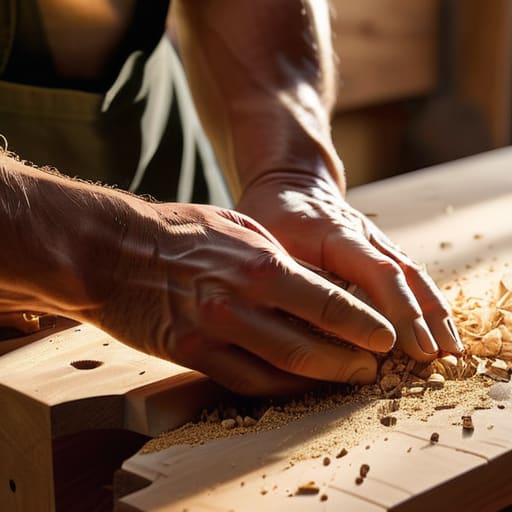
I’ve learned that true creative workflow optimization isn’t about finding a magic app; it’s about protecting the sanctity of the workshop floor. When I’m mid-way through a joinery detail or adjusting the tension on a piece of bent plywood, a single email notification can derail the entire mental architecture of the project. I used to think I could multitask, but I realized that switching contexts is a silent tax on my creativity. Now, I treat my studio time like a fortress.
To keep the walls up, I’ve leaned heavily into batching administrative tasks. I don’t answer invoices as they arrive; I treat them like a messy pile of scrap wood that needs to be cleared away all at once, usually on a Friday afternoon when my hands are too tired for fine carving anyway. By grouping the “manager” duties into these specific, contained windows, I stop the constant bleeding of focus. It’s not about being more efficient in a corporate sense; it’s about ensuring that when I am actually making, I am entirely present in the material.
The Art of Batching Administrative Tasks to Save the Soul
I have a shelf in the corner of my studio dedicated to the “almosts”—the chair legs that were too thin, the joinery that failed the stress test. I keep them because they remind me that design is a series of corrections. I’ve realized that my administrative life requires the same kind of corrective logic. If I try to answer an invoice email in the middle of sanding a walnut tabletop, I’m not just losing time; I’m losing the rhythm of the grain. I’m breaking the very focus that makes the work worth doing.
To protect that headspace, I’ve leaned heavily into batching administrative tasks into specific, non-negotiable windows. I treat Tuesday afternoons like a different job entirely. There is no sawdust, no wood glue, and no sketching—only the sterile, necessary friction of spreadsheets and shipping labels. By treating these hours as a separate “manager” block, I am effectively reducing administrative overhead on my mental energy. It’s a way of compartmentalizing the chaos so that when I pick up a chisel, the only thing I have to worry about is the wood.
Reducing Administrative Overhead the Cost of Every Small Decision
I have a shelf in the back of the studio filled with failed joinery tests and rejected chair legs. Each one is tagged with a note explaining why the geometry failed or why the wood behaved poorly. I keep them because they represent the friction of the process. But lately, I’ve realized that the most exhausting friction isn’t found in the wood; it’s the invisible weight of a hundred tiny, non-creative choices. Every time I stop a sanding session to answer a quick vendor email or check an invoice, I am paying a tax. This is the hidden reality of reducing administrative overhead: it isn’t just about the minutes spent typing, but the mental cost of breaking a flow state.
When we talk about productivity for makers and creators, we often focus on the big milestones. We celebrate the finished piece. But the real drain on our stamina is the constant oscillation between deep work and shallow logistics. If I allow my brain to jump from the tactile precision of a dovetail to the abstract clutter of an email thread, I lose the thread of the design. We have to treat these small decisions as a form of cognitive erosion that must be mitigated.
Entrepreneurial Time Management Strategies for the Reluctant Ceo
There is a specific kind of exhaustion that comes from being a reluctant CEO. It isn’t the physical fatigue of sanding a walnut tabletop or the mental strain of a complex joinery detail; it’s the slow, grinding drain of being responsible for things that don’t actually result in a physical object. I often find myself staring at a spreadsheet, feeling like a fraud, because my hands want to be in sawdust while my brain is being forced to calculate shipping margins. To survive this, I’ve had to adopt certain entrepreneurial time management strategies that feel less like “business growth” and more like defensive architecture for my focus.
I’ve learned that the only way to stop the resentment from building is to treat the “CEO” role as a separate, albeit unpleasant, tool in the kit. I don’t try to be a CEO all day; I try to be a CEO for a very specific, very bounded window of time. By viewing these tasks through the lens of productivity for makers and creators, I stop seeing the paperwork as an intrusion on my life and start seeing it as the necessary scaffolding that allows the studio to actually exist. It’s not about loving the management; it’s about managing the management so I can get back to the wood.
Productivity for Makers and Creators Protecting the Sacred Spark
There is a specific kind of exhaustion that doesn’t come from physical labor, but from the mental friction of switching gears. I call it the “residue of the spreadsheet.” You spend four hours deep in the grain of a walnut slab, feeling the weight of the chisel, and then you’re forced to jump into an email thread about shipping delays. That transition isn’t seamless; it’s a violent interruption. To survive this, I’ve had to treat my focus like a finite material, much like the high-grade plywood I stock in the studio.
True productivity for makers and creators isn’t about doing more; it’s about guarding the perimeter of your concentration. I’ve learned that if I don’t aggressively protect my “making” hours, the administrative noise will eventually colonize the entire day. It’s a form of defensive design. By implementing strict entrepreneurial time management strategies, I’m not just organizing a calendar; I’m building a buffer between the person who dreams of the form and the person who has to invoice for it. Without that boundary, the spark doesn’t just dim—it gets smothered by the sheer weight of the mundane.
The Friction of the Two Lives
I used to think the administrative side of this life was just noise to be silenced, but I’ve realized that the real craft lies in the transition—learning how to close a spreadsheet without losing the mental blueprint of the chair I was just building.
Jonathan Marin
The Final Grain
Looking back at the friction between the sawdust and the spreadsheets, it becomes clear that managing this split isn’t about finding a perfect equilibrium, but about managing the transition. We’ve talked about batching the soul-crushing paperwork, protecting the sacred hours of making, and accepting the role of the reluctant CEO. It is a constant negotiation between the maker who wants to lose themselves in a dovetail joint and the manager who needs to ensure the lights stay on. Ultimately, the goal isn’t to eliminate the administrative weight, but to structure it so it doesn’t erode the very craft that makes the business worth running in the first place.
I often look at my shelf of rejected prototypes—the ones with the slightly too wide chamfers or the failed joinery—and I realize they are just as much a part of my process as the invoices I eventually file. Every decision, even the tedious ones, is a pivot point. If you find yourself struggling to balance the two, remember that the tension itself is a sign of a life lived in pursuit of something real. Don’t aim for a seamless, frictionless existence; aim for a life where the administrative scaffolding is strong enough to support the weight of your most ambitious, messy, and beautiful creations.
