Where to Spend and Where Not to
I have a shelf in my studio dedicated entirely to the “almosts”—the prototypes that died because a material was too precious or a joint was too complex for the client’s bank account. Most design gurus will tell you that learning how to design to a budget is about compromise, as if you’re slowly stripping away the soul of an object until it’s just a hollowed-out version of your original vision. They treat it like a math problem to be solved by cutting corners. But after twenty years of moving between bespoke studios and high-volume production lines, I’ve learned that budget isn’t a cage; it’s a form of resistance.
I’m not here to give you a checklist of cheap materials or a guide on how to hide your mistakes behind veneer. Instead, I want to talk about the critical pivots—those specific, high-stakes moments where you decide exactly where to spend your limited resources so the integrity of the piece remains intact. We are going to look at how to lean into constraints to find the most honest expression of a design. This is about making the hard calls that ensure the final object feels intentional, not just affordable.
The Beautiful Tension of How to Design to a Budget
I have a shelf in the back of my studio filled with what I call “the ghosts”—prototypes that failed because they were too expensive, too heavy, or simply too ambitious for the brief. Looking at them, I realize that a budget isn’t a cage; it’s a set of boundaries that forces a certain kind of clarity. When you are forced to make choices, you stop decorating and start designing. The tension comes from that razor-thin line between a compromise that ruins the soul of a piece and a strategic pivot that actually makes it better.
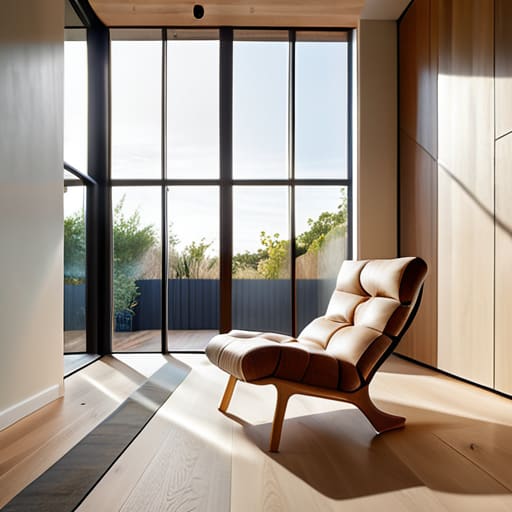
It’s about prioritizing design elements that carry the emotional weight of the room. I’ve spent weeks debating whether to spend the bulk of a client’s fund on a single, sculptural chair or to spread it thin across a dozen mediocre surfaces. Usually, the answer lies in finding affordable material alternatives that don’t feel like an apology. If you can find a way to make a humble plywood edge look intentional rather than cheap, you’ve won. The goal isn’t to spend less; it’s to ensure that every dollar spent is an argument for the object’s existence.
Prioritizing Design Elements the Luxury of the Hard Choice
I have a shelf in the back of my studio dedicated to what I call “the ghosts.” It’s a collection of failed joints, incorrect bevels, and wood species that looked beautiful in a swatch but felt hollow in the hand. When you are prioritizing design elements, you aren’t just picking what looks good; you are performing a sort of triage on your own intentions. You have to decide which part of the object gets to be the hero and which part is allowed to be quiet.
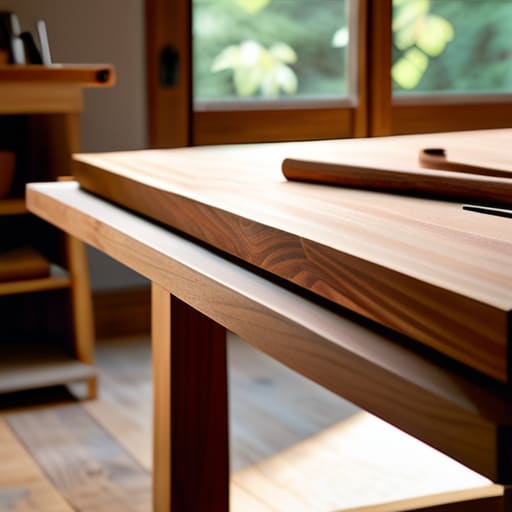
I remember a dining table I worked on last year where the budget hit a wall halfway through the prototyping phase. I was faced with a choice: keep the hand-turned legs and switch to a lesser, more common timber, or keep the walnut and simplify the joinery to something much more standard. That moment of friction is where the real design happens. It’s about finding affordable material alternatives that don’t feel like a compromise, but rather a redirection of the soul of the piece. You aren’t just minimizing costs; you are deciding where the value actually lives.
Smart Space Planning for Savings and Intentionality
I’ve spent enough years staring at floor plans to know that a budget isn’t just a number on a spreadsheet; it’s a spatial boundary. When we talk about smart space planning for savings, we aren’t just talking about making a room feel larger. We are talking about the geometry of necessity. I once spent three weeks obsessing over a custom sideboard, only to realize that if I simply reconfigured the circulation path of the room, the piece became redundant. That is the silent economy of design: the most cost-effective interior design tip isn’t buying a cheaper chair, but realizing you don’t need the chair at all if the room breathes correctly.
Every wall we move and every corner we define carries a weight that isn’t immediately visible in the invoice. Managing renovation expenses becomes a game of foresight rather than reaction. If you can define the “zones” of a life through layout rather than through expensive partitions or heavy millwork, you save the capital for the things that actually touch the hand. I prefer to invest in the tactile—the grain of the wood, the weight of a door—by being ruthlessly disciplined about the voids in between.
The Elegance of Affordable Material Alternatives
I have a shelf in my studio dedicated to the “almosts”—a collection of birch veneers that looked too thin, or heavy brass castings that felt too aggressive. In my twenty years of designing, I’ve learned that looking for affordable material alternatives isn’t about settling for “cheap”; it’s about finding a different kind of honesty. There is a specific, quiet elegance in a well-selected plywood that reveals its grain perfectly, or a linoleum that mimics the warmth of stone without the crushing weight of the invoice.
The trick to minimizing design costs without losing the soul of a project lies in where you place the “truth.” If you are working with a limited budget, don’t try to fake luxury everywhere. Instead, pick one surface—perhaps a tabletop or a singular tactile handle—and invest in the real thing. Surround that one honest element with smarter, more pragmatic choices. It is this intentional contrast that prevents a room from feeling like a series of compromises and instead makes it feel like a curated series of deliberate decisions.
Minimizing Design Costs Without Losing the Soul
I have a shelf in the back of my studio, tucked behind the heavy oak samples, filled with what I call the “ghosts.” These are the prototypes that failed—not because they were poorly made, but because they lacked a certain gravitas. When you are managing renovation expenses, the temptation is to strip away everything until you are left with something sterile and safe. But a house or a room shouldn’t feel like a showroom; it should feel like a series of deliberate choices.
Minimizing design costs doesn’t mean settling for the path of least resistance. It means finding the one or two places where you can afford to be indulgent, so that the rest of the space can afford to be quiet. I often tell my clients that the secret to cost-effective interior design tips isn’t about buying cheap; it’s about knowing where to stop. If you spend your entire budget on a custom-built sideboard, you might find yourself staring at a floor that feels hollow. The goal is to find that perfect equilibrium where the restraint in one area actually amplifies the character of your most important piece.
Managing Renovation Expenses Through Decisive Refusal
There is a specific kind of paralysis that sets in when you look at a renovation quote. It’s the urge to say “yes” to every upgrade, every extra socket, and every premium finish, simply because you’re already committed to the chaos. But I’ve learned that the most effective way of managing renovation expenses isn’t through clever accounting; it’s through the discipline of the “no.” I keep a drawer in my studio full of failed joinery and discarded veneers—each one represents a moment where I let a project drift into complexity for no reason. In a renovation, complexity is the enemy of the budget.
The secret to minimizing design costs without stripping the home of its character lies in knowing which battles to abandon. If you try to fight for premium materials in every single room, you’ll end up with a house that feels expensive but lacks a coherent soul. I prefer to pick one singular, high-impact element—a heavy oak door or a specific stone backsplash—and then ruthlessly deny myself anything else that competes with it. It is the art of the strategic retreat.
Cost Effective Interior Design Tips for the Bold Visionary
There is a specific kind of paralysis that hits when a vision outpaces a bank account. I see it often in my studio—clients who want the sculptural weight of a custom walnut sideboard but are staring down the barrel of a realistic ceiling. The mistake most people make is trying to dilute the entire vision to fit the funds. Instead, you have to lean into the friction. True cost-effective interior design tips aren’t about finding the cheapest version of everything; they are about identifying the one or two “hero” pieces that justify the existence of the room, and then having the discipline to let everything else be quiet.
I tend to think of it like my letterpress work. You don’t use the most expensive, heavy-stock paper for every single flyer, but when you do use it, the texture must be undeniable. When minimizing design costs, I suggest looking for “the pivot.” If you can’t afford the bespoke joinery for the entire built-in unit, spend that money on the tactile hardware or a single, striking material inlay. It’s about creating an illusion of abundance through intentional scarcity. You aren’t just saving money; you are curating a sense of purpose.
The Weight of the Omitted Detail
A budget isn’t a cage that keeps you from good design; it’s a filter that forces you to decide which details actually deserve to exist. I’ve spent years looking at my graveyard of rejected prototypes, and I’ve realized that the most successful pieces aren’t the ones where I tried to do everything, but the ones where I had the courage to let the unnecessary die so the essential could breathe.
Jonathan Marin
The Weight of the Final Decision
Looking back at the process, designing to a budget isn’t about subtraction; it’s about the surgical precision of what you choose to keep. We’ve navigated the tension between material costs and structural integrity, the necessity of space planning, and the discipline required to say no to the ornamental distractions that often mask a lack of direction. It comes down to realizing that a budget is not a cage, but a set of boundaries that forces you to be truly intentional. When you stop trying to buy your way into quality and start designing your way into it, the result is something far more honest than a showroom floor.
I often look at the rejected prototypes in my studio—the ones with the handwritten notes taped to their sides—and I realize that the best designs weren’t the ones that had everything, but the ones that survived the relentless pruning of necessity. As you move forward with your own projects, don’t fear the constraints. Embrace the moments where you almost compromised, and instead, lean into the difficulty of the choice. A well-designed space shouldn’t be a catalogue of expensive acquisitions; it should be a testament to the decisions you made when the path of least resistance was closed to you.
