The Day It Leaves the Workshop
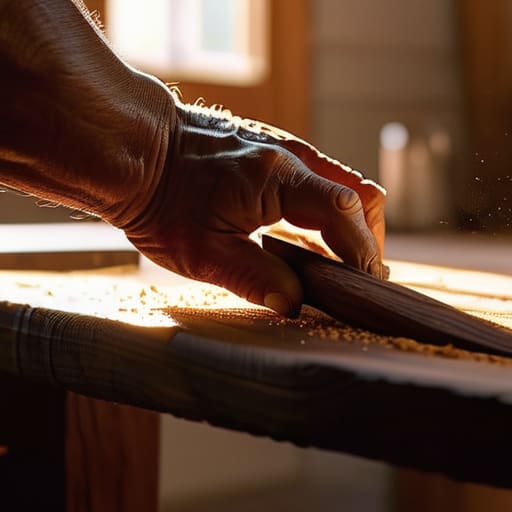
The smell of sawdust is usually a sign of progress, but tonight, it just smells like a deadline. I’m sitting on my workshop stool, staring at a walnut sideboard that has finally stopped being a collection of parts and started being an object. People always talk about the “euphoria of completion” as if it’s some grand, spiritual awakening, but if I’m being honest, what finishing a piece feels like is mostly a quiet, heavy sort of relief mixed with a sudden, sharp anxiety. It’s that moment when the tools are put away, the dust settles, and you’re left alone with the reality of your own decisions.
I’m not here to sell you on the romanticism of the “creative spark” or the magic of the finished product. Instead, I want to talk about the actual mechanics of closure—the grit, the second-guessing, and the peculiar way a project only truly ends when you stop trying to fix it. I’ll be sharing what I’ve learned from twenty years of making things, focusing on the tension between the vision in your head and the stubborn reality of the material in your hands.
The Ghost of the Choice Not Taken
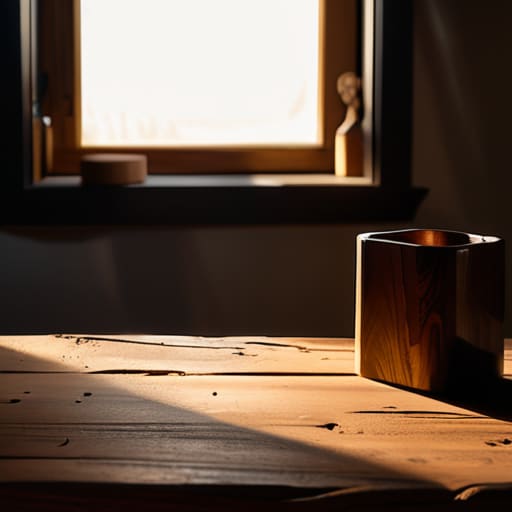
I have a shelf in the back of the studio, tucked behind the scrap walnut and the half-empty ink cans, dedicated entirely to the failures. These are the ghosts of my better intentions. There is a chair leg here, carved with a taper so aggressive it felt daring at the time, but looking at it now, it feels like a mistake. I keep it because the finished piece sitting on the showroom floor—the one that actually sold—only exists because I had the sense to abandon this version.
The real weight of a project isn’t in the successful assembly, but in the haunting presence of those discarded paths. When I finally step away from the workbench, I find myself mentally revisiting the junction where I chose a mortise-and-tenon over a dowel, or why I settled on a matte finish instead of something high-gloss. There is a specific kind of artistic fulfillment and closure that comes not from the object itself, but from the quiet realization that the “right” choice was actually a hard-won victory over a dozen tempting, incorrect ones.
The Violent Euphoria of What Finishing a Piece Feels Like
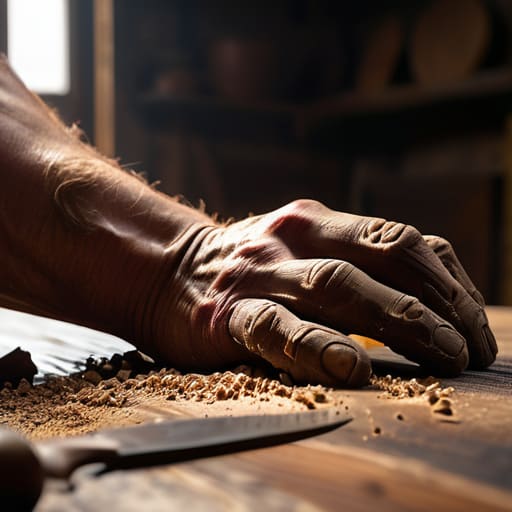
There is a specific, almost jarring violence to the moment the sawdust settles. For weeks, the project has been a living thing, a loud, demanding presence in the studio that dictates when I eat and how much I sleep. Then, suddenly, the last screw is driven or the final varnish is buffed, and the silence that follows is deafening. It isn’t a gentle peace; it is a sudden vacuum. You feel this strange, frenetic surge of adrenaline—a dopamine hit of finishing work that feels less like a reward and more like a physical release of tension.
It is a heavy sort of relief. You realize that the object no longer belongs to your imagination; it has transitioned from a series of problems to solve into a static, unchangeable reality. This shift is where the real psychological weight hits. You are no longer fighting the material; you are standing in the aftermath of the battle. There is a profound sense of artistic fulfillment and closure, but it is always shadowed by the immediate, quiet realization that the studio is now empty, and the next struggle is already beginning to loom.
Chasing the Dopamine Hit of Finishing Work

There is a specific, almost chemical urgency that settles in during those final hours. It isn’t about the beauty of the object, but rather the frantic pursuit of the finish line. I find myself working with a strange, feverish rhythm, driven by the dopamine hit of finishing work that promises an end to the mental noise of a thousand unresolved decisions. It is a singular kind of high—a temporary suspension of the doubt that usually haunts my studio.
But this rush is a double-edged sword. Once the last screw is tightened or the final proof is pulled on the press, the silence that follows can feel deafening. You move from the high-velocity chaos of making into a sudden, hollow stillness. I’ve spent years learning how to navigate the transition from creation to exhibition without crashing into a wall of exhaustion. It’s a delicate calibration; if you don’t respect that sudden drop in momentum, you risk falling straight into a period of stagnation. You have to learn to inhabit the quiet, or the quiet will eventually consume the drive to start something new.
The Creative Process Psychological Impact of Finality
There is a specific kind of vertigo that sets in once the sawdust settles. For weeks, my identity has been tethered to the tension of a joint or the grain direction of a walnut slab; suddenly, that tether is cut. This shift—the transition from creation to exhibition—is rarely a smooth glide. It’s more of a psychological stumble. You move from a state of constant problem-solving into a void where the problems no longer exist, and that silence can be deafening.
I’ve learned that the creative process psychological impact isn’t just about the rush of success, but the strange, hollow weight of sudden stillness. It’s a period of recalibration where you have to figure out who you are when you aren’t actively fixing something. If you don’t respect that gap, you risk falling straight into the trap of overcoming post-project blues by immediately starting something new just to outrun the quiet. I’ve spent many afternoons staring at a finished chair, not with pride, but with a quiet, heavy realization that the struggle—the very thing that defined my days—has simply evaporated.
Navigating the Void of Overcoming Post Project Blues
There is a specific, hollow silence that settles in the studio once the sawdust has been swept away and the last bolt is tightened. It isn’t a peaceful silence; it’s a vacuum. For months, my identity was tethered to the problem of a chair leg or the tension of a joinery detail. When that tension snaps, you’re left with a strange sort of vertigo. I’ve spent many afternoons staring at a blank workbench, feeling less like a designer and more like a ghost haunting my own workspace. This is the unglamorous reality of overcoming post-project blues; the sudden absence of a struggle can feel suspiciously like a failure of purpose.
I’ve learned that you can’t simply jump from one high-velocity build to the next without paying a tax. If I try to force a new sketch immediately, the lines come out shaky and dishonest. Instead, I’ve started treating this period as a necessary part of the creative process psychological impact. It’s a period of decompression, a way of managing creative burnout and relief by allowing the mind to catch up with the hands. Sometimes, the most productive thing I can do is pick up my letterpress and print something that has absolutely no commercial value, just to remind myself that making things can be quiet.
Managing Creative Burnout and Relief in the Aftermath
There is a specific kind of exhaustion that settles into your marrow once the sawdust has been swept away and the final lacquer has dried. It isn’t just physical fatigue; it’s the cognitive tax of having held a thousand tiny, conflicting decisions in your head for months. People often mistake this stillness for peace, but for me, it feels more like a sudden loss of gravity. When you’ve spent weeks obsessing over the tension of a joint or the grain direction of a walnut slab, the sudden absence of that problem can feel less like relief and more like a vacuum.
I’ve learned that managing creative burnout and relief requires a deliberate period of nothingness. You cannot leap straight from the intensity of production into the next concept without paying the toll. If I try to rush into the next sketch too soon, I find myself making shallow choices—designing by habit rather than by intent. I have to sit with the quiet, letting the adrenaline subside so that I can actually experience the artistic fulfillment and closure the piece deserves. It’s about learning to inhabit the silence between projects, rather than trying to fill it with noise.
The Fragile Transition From Creation to Exhibition
There is a specific, unsettling quiet that settles in when a piece moves from the workbench to the showroom floor. In the studio, the object is still part of my internal dialogue; it is a collection of problems I am currently solving. But once it is placed under gallery lights or shipped to a client, that dialogue abruptly ends. This is the most precarious part of the transition from creation to exhibition. You are no longer the maker; you are suddenly the observer, forced to watch as the world interprets your intentions through their own lenses.
It feels less like a victory lap and more like a sudden loss of agency. I often find myself staring at a finished chair in a showroom, not with pride, but with a strange sense of mourning for the unseen iterations that died so this one could live. It is a delicate psychological threshold. If I don’t handle this shift carefully, the sudden distance between my hands and the material can trigger a hollow feeling, making it much harder to find my way back to the next project.
The Weight of the Final Cut
Finishing isn’t this grand, sweeping epiphany; it’s more like the quiet, slightly heavy realization that the argument is finally over, and you’re left standing alone with the object, wondering if you actually won or if you just ran out of ways to change your mind.
Jonathan Marin
The Weight of the Finished Thing
Looking back at the wreckage of the last few months—the burnout, the dopamine spikes, and that hollow, quiet ache that follows a finished commission—I realize that finishing isn’t a singular event. It is a messy, psychological accumulation. We spend so much time obsessing over the technicalities of joinery or the exact grain of a walnut slab, but the real work is the emotional endurance required to move from the chaos of creation to the stillness of a completed object. We navigate the highs of a successful prototype and the crushing lows of the post-project void, all while trying to reconcile the version of the piece in our heads with the physical reality sitting on the studio floor.
In the end, I’ve learned to stop looking for a clean break between projects. There is no perfect line where one idea ends and the next begins; there is only the continuous, rhythmic labor of making. I look at my shelf of rejected prototypes—the ones with my handwritten notes about why they failed—and I realize they aren’t failures at all. They are the necessary scaffolding for everything that actually made it to the light. The true beauty of the craft isn’t found in the perfection of the final product, but in the quiet courage to stand amidst the sawdust and decide to start something new.
