The Habits That Protect My Lungs
I remember standing in my studio three years ago, coughing so hard my ribs ached, staring at a pile of walnut shavings that looked deceptively soft. I had just spent a small fortune on a high-end, industrial-grade extraction system that promised a “pristine environment,” yet the fine, invisible silt was still settling on my letterpress and coating my lungs. It was a humbling realization that expensive gear doesn’t equal safety; it’s more about the discipline of the workflow. I spent weeks recalibrating my entire approach to learn exactly how I manage dust and health through a build, moving away from the shiny catalog promises and toward the messy, practical reality of a working shop.
I’m not here to sell you on a specific brand of overpriced vacuum or a complicated ventilation schematic that requires a degree in fluid dynamics. Instead, I want to share the unfiltered, trial-and-error methods I’ve refined over twenty years of making things. We’ll talk about the small, often ignored habits—the ones that actually matter when the sanding gets intense—and the calculated compromises I make to keep my air clear without losing my momentum.
The Invisible Enemy That Almost Derailed My Entire Project

It started with a subtle, persistent cough that I tried to dismiss as seasonal allergies or just the general grit of a working studio. I was midway through sanding a series of walnut carcasses, feeling productive, when I realized the air wasn’t just dusty—it felt heavy. I had been relying on a basic shop vac and a standard mask, thinking that as long as I could see the sawdust, I was in control. I was wrong. The fine, microscopic particles were bypassing my makeshift setup entirely, hanging in the light beams like a ghost.
I realized then that my lack of rigorous silica dust mitigation strategies wasn’t just a lapse in professional discipline; it was a genuine health risk. I had been treating air quality as an afterthought, a secondary concern to the aesthetic finish of the wood. Looking back at the pile of rejected prototypes in the corner, I realized I was about to make a very permanent mistake with my own lungs. I had to stop everything and pivot to a real HEPA vacuum filtration system before the fine particulate matter became a permanent resident in my chest.
How I Manage Dust and Health Through a Build
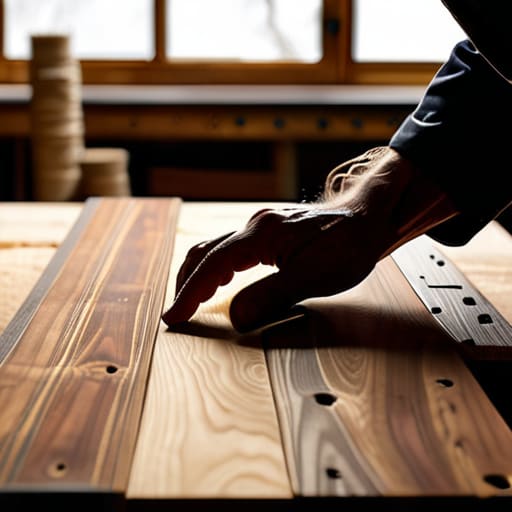
It isn’t about the grand gestures of safety; it’s about the boring, repetitive discipline of the setup. For me, managing a build means treating the air as a material just as much as the walnut or the oak. I’ve learned that if you don’t commit to effective dust containment methods before the first blade touches the wood, you’ve already lost the battle. I spent three hours yesterday just taping off the workshop seams and setting up my airflow, a process that felt like a massive waste of production time. But I remember the cough that lingered for weeks after my last commission, and I know better now.
The real difference lies in the hardware. I stopped relying on cheap shop vacs and moved toward dedicated HEPA vacuum filtration systems that actually pull the fine particulates out of the air rather than just swirling them around the room. It’s a heavy, cumbersome way to work, and it certainly doesn’t feel “inspired,” but it’s the only way to ensure that the air quality stays manageable. I’ve realized that true craftsmanship isn’t just about the joinery; it’s about having the lung capacity to actually enjoy the finished piece.
Choosing the Wrong Respirator a Mistake I Wont Repeat
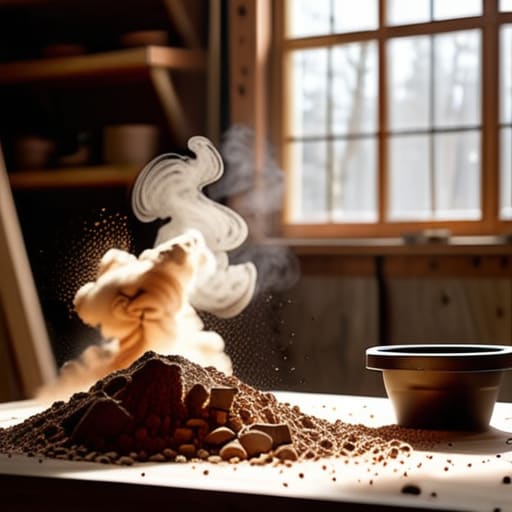
I remember the afternoon I decided a standard N95 mask was “good enough” for a session of sanding down some old, dense walnut. I was in a rush, thinking about the joinery I had planned for later, and I figured the fine particles wouldn’t be an issue for just an hour. I was wrong. Within twenty minutes, I could feel that distinct, heavy tightness in my chest—the kind that tells you you’re breathing in more than just air. It was a humbling, slightly panicked moment of realization that my personal protective equipment for builders was woefully inadequate for the scale of the task.
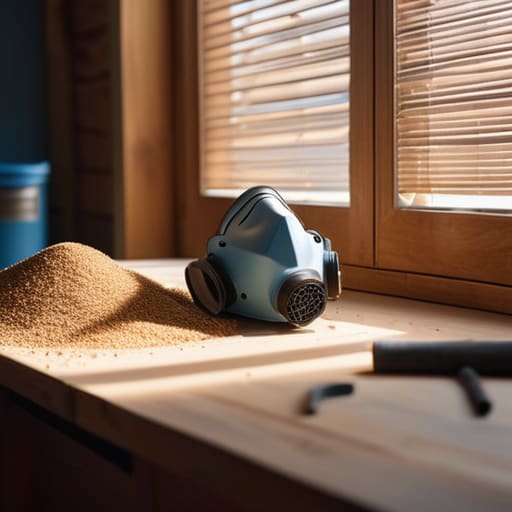
That mistake changed my entire approach to workshop safety. Now, I don’t even start a high-friction task without a proper half-face respirator and a dedicated setup. I’ve learned that true silica dust mitigation strategies or even basic wood particulate control aren’t just about the big, visible clouds; they are about the microscopic stuff that lingers in the lungs long after the shop lights are off. I’ve spent too much money on prototypes to let a preventable lung issue shut down my studio.
Why Silica Dust Mitigation Strategies Saved My Lungs
There is a specific, gritty texture to silica dust that stays with you; it’s not like sawdust, which feels organic, almost soft. Silica is different. It’s microscopic, aggressive, and feels like it’s trying to colonize your very breath. I remember standing in the middle of a stone-cutting session early in my career, thinking a simple mask was enough. I was wrong. I eventually learned that true silica dust mitigation strategies aren’t about reacting to a cloud of white powder; they are about preventing the cloud from ever forming.
I’ve moved away from the “clean up after” mentality toward a “contain at the source” philosophy. Now, my setup relies heavily on integrated HEPA vacuum filtration systems hooked directly to my tools. It’s a cumbersome, expensive way to work, and there were many mornings when I felt the urge to bypass the vacuum just to get a quicker cut. But every time I look at the pile of rejected prototypes in the corner—the ones where I cut corners on safety or precision—I’m reminded that the most important tool in the shop isn’t the saw, but the system that keeps the air clear.
The High Cost of Neglecting Construction Site Air Quality
I used to think that a bit of a cough was just the occupational tax you paid for working with your hands. In my early years, I’d finish a session of sanding a walnut tabletop, wipe the grit from my eyes, and call it a day. I didn’t realize that by ignoring construction site air quality, I wasn’t just being a “tough” craftsman; I was essentially letting my lungs become a graveyard for fine particulates. The cost isn’t just a medical bill down the road—it’s the immediate, heavy fatigue that settles into your bones when your body is working overtime just to oxygenate your blood.
There is a specific kind of mental fog that sets in when you’ve been breathing in micro-dust for four hours straight. It kills your precision. I’ve sat at my workbench, trying to execute a delicate joinery cut, only to realize my hands were shaking because I was slightly hypoxic. Investing in proper personal protective equipment for builders isn’t a luxury or a bureaucratic checkbox; it’s a fundamental requirement for maintaining the cognitive clarity that good design demands. If you can’t breathe clearly, you can’t think clearly, and if you can’t think, the work will inevitably suffer.
Trusting Hepa Vacuum Filtration Systems Over Simple Sweeping
I used to be one of those guys who thought a stiff-bristled broom and a bit of muscle were enough to tidy up a workshop. It’s a satisfying motion, honestly—the rhythmic sweep, the pile of debris forming in the corner. But I eventually realized that sweeping is just a polite way of reintroducing fine particulate matter into the air you’re breathing. Every stroke of the broom sends a plume of microscopic silica back into your breathing zone, making a mockery of any mask you might be wearing.
I made the switch to integrated HEPA vacuum filtration systems about five years ago, and it changed my entire relationship with the workspace. Instead of chasing dust around, I catch it at the source. When I’m sanding a joint or cutting through dense MDF, the vacuum isn’t just a cleaning tool; it’s an active part of my effective dust containment methods. It’s less about the aesthetic of a clean floor and more about the invisible reality of the air. I’ve learned that if you can see the dust dancing in a shaft of light, you’ve already lost the battle.
Mastering Effective Dust Containment Methods Before the Chaos Begins
I’ve learned that if you wait until the first saw blade hits the timber to think about containment, you’ve already lost. In my early years, I used to treat dust like an inevitable byproduct—something you just swept up when the job was done. That was a naive, expensive mistake. Now, I treat effective dust containment methods as part of the actual design process, just as vital as the joinery itself. I set up my plastic sheeting and air scrubbers before I even unbox my tools, creating a controlled environment that keeps the chaos from bleeding into the rest of the studio.
It’s about creating a perimeter of defense. I don’t just throw up some loose poly rolls and hope for the best; I seal the zones. It’s a tedious, unglamorous part of the setup that feels like a distraction from the “real” work, but it’s the only way to maintain decent construction site air quality. If you don’t define the boundaries of your mess early on, the fine particles will find their way into your lungs, your finished pieces, and every corner of your workspace before you even realize the battle has started.
The cost of a clean finish
I used to think a successful build was measured by the joinery or the grain matching, but after years of breathing in the debris of my own ambition, I’ve realized that the most vital part of the process is the invisible infrastructure—the filtration, the masks, the sheer discipline of containment—that ensures I’m actually around to see the finished piece sitting in the light.
Jonathan Marin
The Weight of the Invisible
Looking back at the sawdust-caked floor and the heap of rejected prototypes in the corner, I realize that managing a build is rarely about the grand gestures of joinery or the final polish. It is actually about the unglamorous, granular decisions made in the margins: choosing the HEPA vacuum over the broom, investing in a respirator that actually fits, and refusing to let silica dust become a silent partner in my process. I could have easily prioritized speed, but that would have meant trading my long-term health for a few hours of saved time. In the end, the most successful builds aren’t just the ones that look beautiful on a showroom floor, but the ones where the maker is still healthy enough to enjoy the result.
We often talk about design as an act of creation, but for those of us who live in the shop, it is equally an act of preservation. Every time I set up a containment barrier or check my filtration seals, I am designing my own future. It is easy to view safety protocols as a constraint on creativity, but I’ve learned they are actually the framework that allows it to persist. Don’t wait for a cough or a heavy chest to realize the cost of your craft. Build with intention, protect your lungs, and remember that the most important tool in your studio is the body you use to operate it all.
