Choosing Hand Tools for One Operation
I was standing over a walnut sideboard last Tuesday, the smell of sawdust and linseed oil thick in the air, staring at a joint that looked technically perfect but felt wrong. It had been cut by a CNC router—mathematically flawless, surgically precise, and utterly lifeless. That’s the trap, isn’t it? We’ve been sold this idea that efficiency is the ultimate metric of success, but in my studio, the metric is something much harder to quantify. I spent twenty minutes just tracing the grain with my thumb, wrestling with how I decide hand or machine for a step in a process that was already halfway finished. It wasn’t a question of speed; it was a question of whether I was making furniture or just manufacturing parts.
I’m not here to give you a flowchart or a lecture on industrial optimization. Instead, I want to talk about the friction—the specific, often uncomfortable moments where you have to choose between the ease of a motor and the resistance of a blade. I’ll share the logic I use to navigate that tension, based on two decades of making things that actually need to last. This isn’t about finding a perfect formula, but about learning to recognize the exact moment a machine stops being a tool and starts being a crutch.
The Tension Between the Blade and the Motor
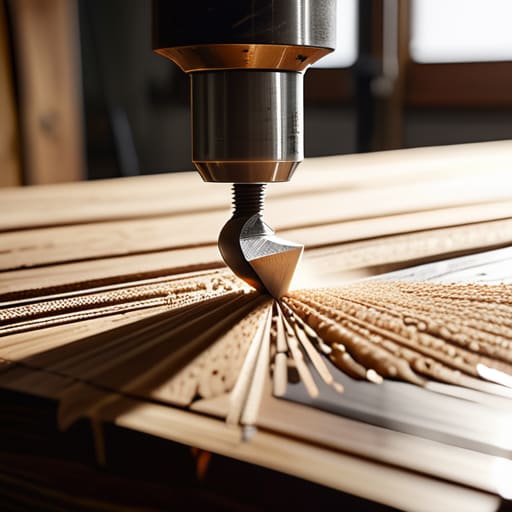
There is a specific, unsettling vibration that happens when I stand between a hand plane and a CNC router. On one side, you have the terrifying, relentless speed of the motor—a machine that doesn’t tire, doesn’t doubt, and certainly doesn’t care about the grain. On the other, there is the slow, rhythmic resistance of steel against wood. I often find myself caught in that friction, weighing the precision in handcrafting vs industrial production not as a math problem, but as a question of character.
Last week, I was looking at a series of tapered legs for a new lounge chair. The math told me to run them through the mill; the efficiency was undeniable. But as I watched the dust fly, I realized that the machine was stripping away the very “errors” that make a piece feel lived-in. It’s a constant negotiation of craftsmanship vs mechanical consistency. If I let the motor do everything, I might produce a perfect object, but I fear I’ll end up producing a sterile one. I ended up choosing the blade, even though it meant staying in the studio two hours longer.
How I Decide Hand or Machine for a Step
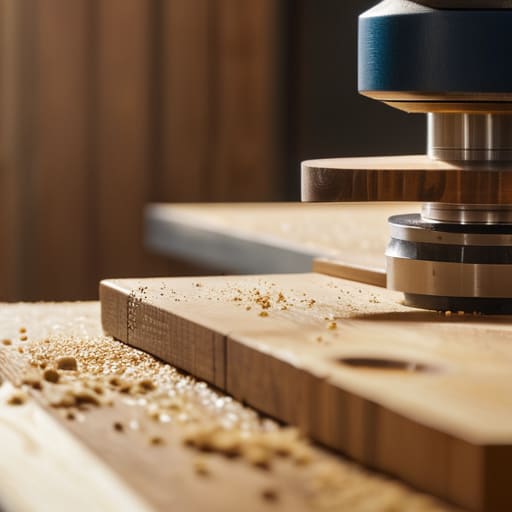
I usually start by looking at the grain. If I’m prepping a large run of components, the logic of scalability of manufacturing methods takes over; there is no sense in fighting a CNC router when it can do in ten minutes what would take me three hours of sanding. But the decision isn’t just about speed. I find myself weighing the precision in handcrafting vs industrial production not as a mathematical equation, but as a question of character. A machine offers a relentless, sterile perfection that can sometimes feel hollow.
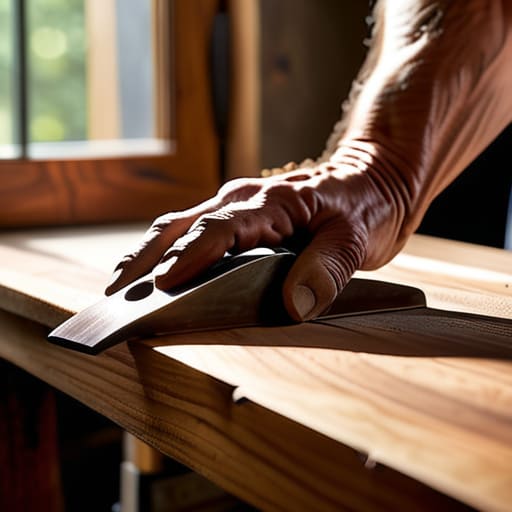
When I’m stuck, I ask myself: where does the object need to breathe? If a joint is meant to be hidden, I let the machine do the heavy lifting. But if it’s a chamfer that a user’s thumb will graze every single morning, I reach for the block plane. That’s where the human touch in quality control becomes more than a buzzword; it becomes a tactile necessity. I’m looking for those tiny, intentional deviations that signal a piece wasn’t just spat out by a program, but was actually considered.
Chasing Precision in Handcrafting vs Industrial Production
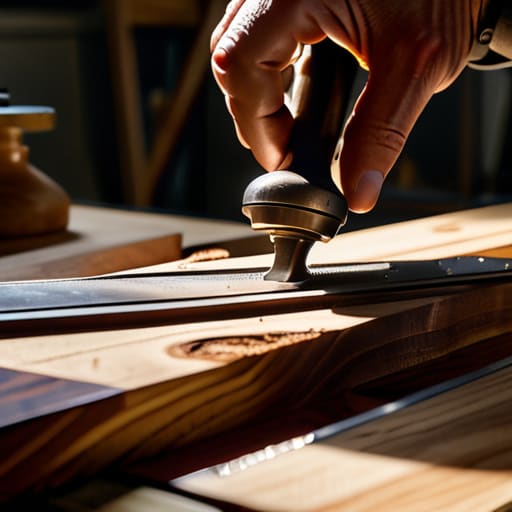
There is a specific kind of madness in trying to outrun a CNC router with a hand plane. I’ve spent many late afternoons in the studio, sweat stinging my eyes, trying to achieve a level of flatness that a machine could do in thirty seconds without breaking a sweat. On paper, the cost-benefit analysis of machine automation suggests I am wasting my life. If I want to scale, if I want to survive, I should let the spindle do the heavy lifting. But there is a ghost in the machine—a certain mathematical perfection that feels strangely sterile, almost defensive, as if the object is trying too hard to prove it exists.
When I opt for the hand tool, I am not actually chasing a higher degree of accuracy; I am chasing a different kind of truth. In the debate of precision in handcrafting vs industrial production, the machine wins on the micron, but it loses on the nuance. A machine produces a repeatable error, a sterile consistency that lacks character. I find that the most honest pieces come from that narrow margin where the wood resists me just enough, forcing a dialogue that a programmed path simply cannot replicate.
The Cost Benefit Analysis of Machine Automation
When I sit down with a new project, the math usually starts long before the first cut. I find myself running a mental cost-benefit analysis of machine automation, weighing the cold speed of a CNC router against the unpredictable, expensive rhythm of my own hands. It isn’t just about the hourly rate; it’s about where the value actually lives. If I automate the repetitive joinery, I save time, yes, but I also risk a certain sterility that no amount of sanding can truly mask.
The real friction lies in the scalability of manufacturing methods. A machine offers a seductive promise of perfection, a way to replicate a single successful chair a hundred times over without a single deviation. But there is a hidden tax in that consistency. I’ve learned that true quality control isn’t just about hitting a tolerance of a thousandth of an inch; it’s about the human touch in quality control—that ability to feel when a grain pattern is fighting the chisel and to pivot accordingly. If I outsource the soul of the piece to a motor, I might gain efficiency, but I lose the ability to respond to the material’s temperament.
Where Manual vs Automated Workflow Efficiency Fails
There is a specific kind of madness that sets in when you try to apply a spreadsheet to a piece of walnut. We talk a lot about manual vs automated workflow efficiency as if it were a simple math problem, but the math usually fails when the material starts fighting back. I’ve sat in my studio, staring at a CNC program that promised a perfect run of ten chairs, only to realize that the machine couldn’t “feel” the grain direction change in the middle of a curve. A machine sees a coordinate; a person sees a potential fracture.
The math breaks down because efficiency isn’t just about speed; it’s about the intelligence of the correction. When a machine hits a knot, it simply grinds through, often ruining the piece or the bit. When I’m at the bench, my hands sense that resistance before the tool even bites. This is where the standard cost-benefit analysis of machine automation falls apart. You can calculate the cost of the electricity and the labor hours, but you can’t easily quantify the cost of a machine’s indifference to a mistake that a human would have sensed and sidestepped.
The Ghostly Human Touch in Quality Control
There is a specific kind of silence that settles over a workshop when a machine finishes its cycle. The hum dies down, leaving only the smell of toasted sawdust and the clinical perfection of the cut. In those moments, I find myself performing a ritual that no sensor or optical scanner can replicate. I run my thumb along the edge, not just looking for a deviation in measurement, but feeling for the unspoken character of the grain. A machine sees a millimeter as a mathematical constant, but I see it as a variable that dictates how the wood will breathe or move in five years.
This is where the debate between craftsmanship vs mechanical consistency becomes visceral. You can program a CNC router to hit the same coordinate ten thousand times, but it cannot feel the slight resistance that suggests a knot is about to compromise the structural integrity of a joint. True quality control isn’t about checking if the part matches the CAD file; it’s about deciding if the part feels right. I often find that the most important part of my process isn’t the fabrication itself, but the quiet, intuitive moment of rejection that keeps the work honest.
When Craftsmanship vs Mechanical Consistency Defines Success
There is a specific kind of anxiety that sets in when you realize a piece is becoming too perfect. In my studio, I often run into this wall where the scalability of manufacturing methods starts to strip away the very character I set out to create. If I’m designing a chair meant to sit in a dimly lit corner of a home, a machine-perfect edge might actually feel aggressive, almost clinical. Success in that context isn’t about hitting a tolerance of a thousandth of an inch; it’s about the slight, rhythmic variations that signal a human was present.
The real struggle lies in the tension of craftsmanship vs mechanical consistency. When I’m working on a high-end commission, I don’t want a thousand identical units; I want a thousand unique iterations of a single idea. If I rely too heavily on a CNC router to define every facet, I lose the ability to pivot mid-process when the grain of the wood tells me something different about the structural integrity. Sometimes, the most successful design choice is the one that intentionally leaves room for a little bit of beautiful imperfection.
The Threshold of Intent
I don’t choose a machine because it’s faster, and I don’t choose a hand tool because it’s more ‘authentic’; I choose based on where I want the conversation with the material to happen. If I want to dictate the outcome with absolute authority, I reach for the motor. But if I want to leave room for the wood to argue back, I pick up the chisel.
Jonathan Marin
The Final Decision
Looking back at the workshop floor, I realize that the choice between a hand plane and a CNC router is never really about speed or even cost. It is about where the tension lives in the object. I’ve spent decades weighing the relentless efficiency of the motor against the stubborn, unpredictable resistance of the grain. We’ve talked about precision, automation, and the thin line between consistency and soul, but at the end of the day, these aren’t just technical choices. They are the moments where I decide whether a piece of furniture is merely a product of a system or a testament to a specific intent.
I often think about those rejected prototypes gathering dust in the corner of my studio—the ones where I leaned too hard into the machine and lost the rhythm, or where I clung too tightly to the hand tool and lost the shape. Those failures are my real teachers. They remind me that the goal isn’t to reach a perfect, sterile equilibrium, but to find that sweet spot where the maker’s hand is felt even in the most industrial of lines. Ultimately, the most beautiful things I have ever built weren’t the ones that were “perfectly” executed, but the ones where I made the hard choice to let the human element win.
