
The Mistake You Cannot Hide
I can still smell the burnt linseed oil and the metallic tang of a failed weld from that Tuesday in 1998. I was twenty-four, working on a prototype for a high-end lounge chair, and I had just driven a screw straight through a hand-finished walnut veneer in a spot where no one could miss it. My instinct wasn’t to fix it; it was to hide it, to pretend the mistake didn’t exist or to bury it under a layer of expensive, dishonest filler. But there is a specific, gut-wrenching panic that comes when you realize you’re learning how to handle a mistake in a visible place without a manual to guide your hands.
I’m not here to give you a corporate seminar on “damage control” or some sanitized PR strategy for smoothing over errors. That’s not how we work. Instead, I want to talk about the integrity of the repair. I’ll be sharing what I’ve learned from two decades of watching wood grain fail and steel bend, focusing on how to own the error rather than erasing it. We are going to look at the decision to pivot—the moment where you stop trying to hide the flaw and start designing around it to create something even more honest.
The Beauty of the Near Miss Owning Your Mistakes
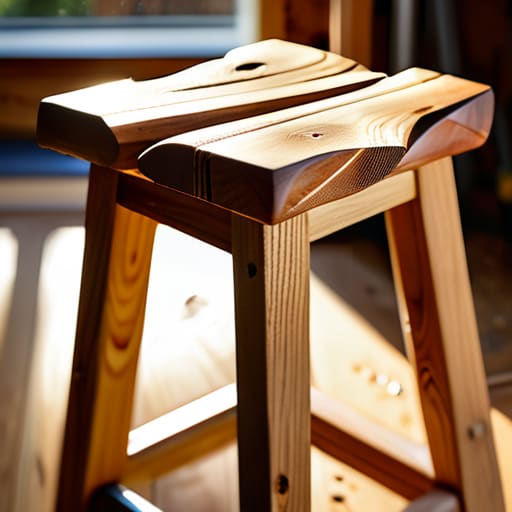
I have a shelf in my studio filled with what I call “the ghosts.” They are the chairs with the wrong bevel, the lamps with the off-center joinery, and the tables where the grain refused to cooperate. To a client, they are failures; to me, they are the most honest things I own. When a mistake happens in a public or professional setting, our instinct is to hide the seam, to sand down the error until it looks like it was never there. But there is a profound dignity in owning your mistakes without the frantic scramble for cover.
True professional error management isn’t about the perfection of the result, but the integrity of the pivot. When you stumble in front of an audience, the temptation is to deploy hollow damage control strategies—the kind of corporate gloss that feels like a cheap veneer over particle board. Instead, I’ve found that people don’t actually want a polished lie. They want to see the person who had the courage to say, “I missed the mark here, and this is how I am fixing it.” That transparency is the only real way of rebuilding trust after failure.
How to Handle a Mistake in a Visible Place

When the error is out in the open—a misaligned joinery detail on a showroom piece or a typo on a printed run—the instinct is to hide it. But in my experience, the most effective professional error management isn’t about the erasure of the flaw; it’s about the speed of the response. If I spot a mistake that a client has already seen, I don’t wait for the phone to ring. I walk into the room, point to the deviation, and explain why it happened. There is a specific kind of weight to owning your mistakes in real-time that actually lightens the tension in the room.
The practical side of this involves more than just an apology; it requires a clear set of corrective action steps that move the conversation from “what went wrong” to “how we fix it.” I’ve found that people don’t actually lose faith in your skill because of a single lapse in judgment. They lose faith when they sense you are trying to manage the perception rather than the problem. True accountability in the workplace is found in the transition from the error to the solution.
Mastering Damage Control Strategies Without Losing Your Soul

There is a specific kind of panic that sets in when you realize a flaw isn’t just a private frustration, but a public reality. In my studio, it’s usually a misplaced grain line or a joint that refuses to seat; in the professional world, it’s a miscalculation that everyone can see. The temptation is to deploy these polished, hollow damage control strategies we see in corporate handbooks—the kind of language that feels like sanding over a crack with cheap filler instead of fixing the structure. But you can’t polish your way out of a structural failure.
True professional error management isn’t about the frantic scramble to hide the evidence; it’s about the quiet, deliberate process of rebuilding trust after failure. I’ve learned that people don’t actually lose respect for the person who slips; they lose respect for the person who pretends the slip didn’t happen. When you step up and take genuine accountability in the workplace, you aren’t just fixing a mistake—you are demonstrating the integrity of your process. You are showing them that while the object might be flawed, the maker is not.
The Weight of Accountability in the Workplace
There is a specific, heavy silence that follows a public blunder—the kind that settles in a room when a client realizes the joinery on a prototype is off by three millimeters, or a colleague sees a typo in a high-stakes presentation. In my studio, I’ve learned that true accountability in the workplace isn’t about the apology; it’s about the gravity of the aftermath. It is easy to pivot toward defensive excuses, but those are just splinters in the grain of your reputation. Real professional error management requires you to stand in that silence and acknowledge that the gap between what was intended and what was delivered is now your responsibility to bridge.
This isn’t about performative regret. It is about the quiet, methodical work of rebuilding trust after failure. When I look at my shelf of rejected prototypes, I don’t see failures; I see the cost of learning. In a professional setting, the goal isn’t to pretend the mistake didn’t happen, but to demonstrate that you have the structural integrity to own the error and implement the necessary corrective action steps without crumbling. You prove your worth not by being infallible, but by being resolute in your recovery.
Professional Error Management Choosing the Harder Path
In my studio, I have a shelf dedicated to the “almosts”—the chair legs that were too thin, the joinery that failed the stress test, the drawer slides that caught. Most people see these as debris, but to me, they are the most honest things I own. Professional error management isn’t about the polished final product; it’s about how you treat the wreckage when the veneer cracks in front of a client. It is tempting to reach for the quick fix, the polite omission, or the subtle pivot that hides the flaw. But there is a specific, heavy kind of integrity found in choosing the harder path: the one where you don’t just fix the object, but you own the error in its entirety.
True accountability in the workplace isn’t a corporate buzzword; it is a tactile, often uncomfortable practice. When a mistake is visible, the instinct is to perform damage control strategies that prioritize optics over substance. However, I’ve learned that rebuilding trust after failure requires more than a corrected blueprint. It requires showing your work—even the parts that failed. You don’t just implement corrective action steps; you demonstrate that you understand exactly why the grain split or why the measurement was off. You prove that your standard isn’t just about perfection, but about the rigor of your response.
Corrective Action Steps That Honor the Intention
When I’m at my letterpress, if a registration is off by a hair, I don’t just slap a sticker over it and call it a day. That’s a lie told in ink. In design, and certainly in life, true corrective action steps aren’t about erasing the evidence; they are about integrating the fix so deeply that the correction becomes part of the object’s history. If you’ve made a visible error, the goal isn’t a frantic cover-up. It is about finding a way to mend the gap that respects the original intent of the work.
This requires a specific kind of discipline in professional error management. You have to ask yourself: does this fix merely hide the flaw, or does it actually resolve the tension? When we talk about rebuilding trust after failure, people aren’t looking for a seamless, plastic perfection. They are looking for the structural integrity of your response. I’ve learned that the most honest way to move forward is to ensure the remedy is as well-considered as the original design, turning a moment of panic into a deliberate act of restoration.
Rebuilding Trust After Failure the Final Polish
Rebuilding trust isn’t a single, sweeping gesture; it’s more akin to the slow, repetitive sanding of a joint that didn’t quite seat right the first time. You can’t just patch the surface and hope no one notices the seam. In my studio, when a veneer splits unexpectedly, I don’t just glue it and move on. I have to demonstrate through my subsequent work that the structural integrity is still there. This is the essence of rebuilding trust after failure. It requires a quiet, almost stubborn consistency in your following actions that proves the error was an outlier, not a new standard of practice.
True professional error management means moving past the apology and into the rhythm of reliable output. People stop looking for the crack once they see the stability of the grain. You prove your worth not by claiming perfection, but by showing that your corrective action steps have actually changed the way you approach the bench. It’s about the long game—letting the steady, predictable quality of your next ten projects serve as the final, most convincing argument for your competence.
## The Grain of the Error
When a mistake sits in plain view, don’t try to sand it down until the surface is unnaturally smooth; instead, treat it like a knot in a piece of walnut. You don’t hide it with heavy lacquer—you acknowledge the tension it creates and let the repair become part of the object’s actual history.
Jonathan Marin
The Grain of the Finished Piece
Ultimately, managing a visible error isn’t about the frantic rush to erase the evidence or the desperate scramble to hide the flaw. It is about the sequence of choices that follow: the accountability you take, the integrity of your corrective steps, and the refusal to let a lapse in judgment become a lapse in character. We have looked at how to navigate the immediate damage, how to preserve your professional soul while fixing the mess, and how to slowly rebuild the trust that a mistake inevitably chips away. In the end, the way we handle the crack in the veneer tells people far more about our workmanship than the initial, perfect assembly ever could. It is a process of intentional repair, ensuring that the correction becomes a permanent part of our professional history.
I often look at the scrap pile in the corner of my studio—the rejected joints, the misaligned dowels, the wood that split when the grain was too tight. I keep them because they represent the moments where I learned something a perfect success could never teach me. A mistake in the public eye is much like those prototypes; it is a raw, unpolished version of the truth. Do not fear the visible scar of a wrong turn. Instead, treat it as the moment where you truly began to design your reputation. The most resilient structures, and the most respected people, are not those who never falter, but those who possess the strength to integrate the error into a much better design.
