
Estimating From Your Own Records
I remember sitting in my studio ten years ago, staring at a pile of rejected walnut joinery prototypes, realizing that my biggest failure wasn’t my technique, but my math. I had convinced myself that precision was a matter of better tools or more expensive software, when in reality, I was just lying to myself about how long a complex curve actually takes to sand. We’ve been sold this myth that mastery comes from complex spreadsheets or predictive algorithms, but when it comes to the actual grit of production, those things are often just expensive ways to mask our own optimism. If you are looking for a magic formula for how to improve your own estimates, you won’t find it in a productivity app; you’ll find it in the uncomfortable realization of where your intuition fails you.
I’m not interested in giving you a lecture on project management theory. Instead, I want to talk about the friction between the ideal design and the messy reality of the workshop floor. I’m going to share the specific, often painful lessons I’ve learned from twenty years of watching my timelines collapse, focusing on how to build a buffer that is based on actual history rather than wishful thinking.
The Ghost of the Wrong Decision Why Estimates Fail

I have a shelf in the back of my studio filled with bent plywood scraps and failed joinery—remnants of decisions that looked perfect on a screen but collapsed under gravity. These aren’t just mistakes; they are the ghosts of the wrong decisions. When I sit down to map out a new production run, I often find myself fighting the urge to project a frictionless reality. We tend to estimate based on our best-case scenarios, ignoring the friction of the real world. This is where the lack of calibration of judgment becomes dangerous. We aren’t just calculating time or material; we are fighting our own tendency to believe our own hype.
The failure usually stems from a subtle, quiet optimism that masks our inherent blind spots. We treat a project like a straight line, forgetting that every design process is actually a series of corrections. To move past this, I’ve had to learn the hard way that improving predictive accuracy isn’t about being a better mathematician; it’s about being a more honest observer of your own past failures. You have to look at the rejected prototypes—not as waste, but as the most honest data points you own.
How to Improve Your Own Estimates by Embracing Uncertainty

I’ve spent many afternoons staring at a pile of rejected chair legs, wondering if the slight adjustment in the taper was a stroke of genius or just a way to hide a structural flaw. In the same way, we often approach our timelines with a similar, misplaced confidence. To get better, we have to stop treating our first instinct as gospel. I’ve found that calibration of judgment is less about being a math whiz and more about being an honest observer of your own failures. It requires looking back at the last five times you thought a task would take two hours, only to have it bleed into four, and actually sitting with that discomfort.
Instead of chasing some mythical perfection, I’ve started looking for ways of reducing estimation bias by building in a buffer that isn’t just a random guess, but a reflection of past chaos. We tend to plan for the “sunny day” version of a project, ignoring the inevitable friction of reality. True improvement doesn’t come from a sudden surge in intuition; it comes from acknowledging that your initial numbers are almost certainly wrong, and learning to embrace that margin of error as a fundamental part of the process.
The Friction of Truth Overcoming Cognitive Errors in Prediction
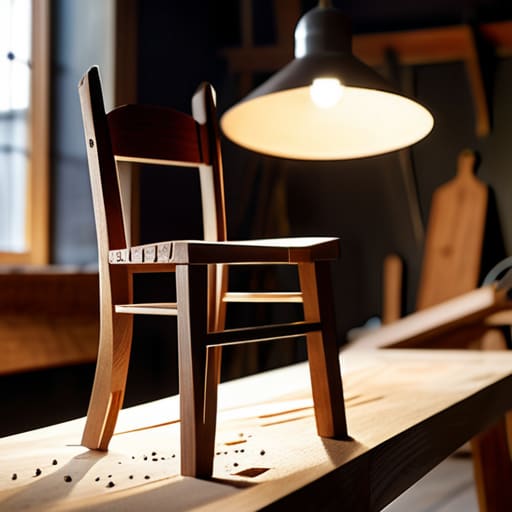
The problem with my own brain is that it wants to present a finished, polished version of the truth, even when I’m still in the sketching phase. In my studio, I call this the “optimism of the clean line.” We tend to ignore the messy reality of a workshop—the dull blades, the warped timber, the late deliveries—because our minds are already racing toward the completed chair. This is where we stumble into the trap of overcoming cognitive errors in prediction; we aren’t actually looking at the work, we are looking at our idealized version of it.
To fight this, I’ve had to learn a certain kind of discipline that feels less like design and more like an audit. It requires a constant calibration of judgment, forcing myself to look back at the pile of rejected prototypes in the corner and ask why the timeline for the last one collapsed. It isn’t about being a mathematician, but about acknowledging that my intuition is often just a mask for my own ego. We have to treat our past failures not as annoyances, but as the only honest data points we actually own.
The Precision Trap Reducing Estimation Bias in Every Forecast
We have this pathological urge to believe that a more precise number is a more truthful one. In the studio, I see it constantly: a designer insists a prototype will take exactly fourteen days, as if the wood won’t warp or the CNC machine won’t seize up on a Tuesday afternoon. This is the precision trap. We mistake the granular for the accurate, forgetting that specificity is not a substitute for truth. When we lean too hard into rigid numbers, we aren’t actually planning; we are just performing certainty.
To move past this, I’ve had to focus on the calibration of judgment. It’s less about finding a magic formula and more about looking at my own track record of being wrong. I keep a notebook of those “failed” timelines—not to mourn them, but to see the patterns. By integrating a bit of statistical forecasting techniques—even just a rough mental average of my past delays—I can start reducing estimation bias before it takes root. It’s about trading the comfort of a single, sharp number for the honesty of a range.
Refining the Edge the Art of Calibration of Judgment
In my studio, I have a shelf of failed joinery—pieces where the angle was off by a fraction of a degree, or the wood grain was too temperamental for the intended cut. I don’t look at them as failures, but as markers of where my intuition diverged from reality. This is the essence of the calibration of judgment. It isn’t about being right every time; it’s about knowing exactly how often you are wrong. If I tell a client a prototype will be ready in three weeks, and I am consistently late, I haven’t just missed a deadline—I have lost my ability to read the room, or the wood, or the math.
True refinement comes when you stop treating your gut feeling as gospel and start treating it as a variable. By integrating data-driven estimation methods with a healthy dose of skepticism, you begin to bridge the gap between what you hope will happen and what actually does. It’s a slow, often frustrating process of improving predictive accuracy through trial and error. You have to learn to weigh your confidence against your history, turning every near-miss into a tool for a more honest forecast.
Beyond Intuition Deploying Data Driven Estimation Methods
I have a shelf in the back of my studio filled with failed joinery samples—mahogany scraps that were too brittle or birch that warped under the glue. Looking at them, I realize that my early career was built on a dangerous reliance on “gut feeling.” I thought I could sense the weight of a project just by looking at the sketches. But intuition is a fickle tool; it’s often just a polite mask for our own biases. To move past this, I’ve had to lean into more rigorous data-driven estimation methods. It isn’t about replacing the designer’s eye, but about providing it with a scaffold of reality.
When I sit down to map out a new production run, I no longer rely on how I feel about the timeline. Instead, I look at the wreckage of my previous logs. By applying basic statistical forecasting techniques to my own historical errors, I can see the patterns my ego tries to hide. This isn’t just bookkeeping; it is a way of improving predictive accuracy by acknowledging that my past self was frequently overconfident. We have to treat our own history as a dataset, using the friction of past mistakes to smooth out the guesswork of the future.
The Final Margin Improving Predictive Accuracy Through Statistical Forecast
I have a shelf in the back of my studio filled with failed joinery samples—pieces where the math was sound, but the material behaved with a stubborn, unpredictable life of its own. It’s a reminder that even with the best intentions, we often fall prey to the illusion of certainty. To move past this, I’ve started leaning into statistical forecasting techniques not as a way to eliminate doubt, but to map its boundaries. Instead of picking a single, confident date or cost, I look at a range of probabilities. It’s about acknowledging that a single number is almost always a lie told to make ourselves feel more in control.
By treating my projections as a distribution rather than a point, I’m essentially improving predictive accuracy through the acceptance of variance. This isn’t just about crunching numbers; it’s about the discipline of looking at past failures to inform future spreads. When I integrate these methods, I find I am no longer fighting the chaos of a project, but rather building a buffer that respects it. It turns the act of estimation from a nervous guess into a calculated, honest assessment of what is actually possible.
The Value of the Scrap Heap
I keep a drawer full of rejected prototypes, each one a physical record of a moment where my intuition failed me. We treat a bad estimate like a mistake to be erased, but in design—and in life—the most accurate forecast isn’t the one that hits the mark perfectly; it’s the one that accounts for the exact moment you realized you were about to be wrong.
Jonathan Marin
The Weight of the Final Call
We’ve spent a lot of time dissecting the mechanics of prediction, from the messy friction of our own cognitive biases to the cold, hard comfort of statistical forecasting. Improving your estimates isn’t about finding a magic number or a flawless formula; it is about building a system that respects the inherent volatility of the work. It requires us to move past the seductive lie of precision and instead embrace a disciplined calibration of judgment. By integrating data-driven methods with a deep, honest awareness of our own tendencies to overreach, we stop guessing and start navigating the margins with intention.
In my studio, I have a shelf full of failed joints and warped wood—prototypes that taught me more than the finished pieces ever could. I think of estimation in much the same way. A missed deadline or a blown budget is just another rejected prototype, a piece of data that tells you exactly where your understanding of the material failed. Don’t fear the error; fear the refusal to learn from it. The goal isn’t to be a perfect prophet, but to become a designer who understands that true mastery lies in the ability to account for the beautiful, unpredictable uncertainty of the process.
