
Learning From Work You Admire
I was hunched over my workbench last Tuesday, clearing a layer of walnut dust off a prototype that had been sitting in my “reject” pile for three years. I was looking at a chair leg that failed because the taper was too aggressive, but as I stared at it, I realized the curve was almost identical to a mid-century piece I’d admired in a grainy monograph back in the nineties. There is this modern, frantic anxiety that every creative impulse must be birthed from a vacuum, a fear that if you look too closely at your predecessors, you’ve somehow committed a crime. But the truth is much simpler, and far less litigious: why influence is not theft is a question of digestion, not mimicry.
I’m not here to give you a lecture on copyright law or some lofty, academic treatise on the sanctity of the “original” idea. Instead, I want to talk about the internal friction of making things. I’m going to share what I’ve learned from twenty years of moving between my own studio and industrial production lines about how we actually build a visual language. We’re going to look at how you can honor your inspirations without losing your own voice, focusing on the decisions that nearly went the other way.
The Ghost in the Machine Why Influence Is Not Theft
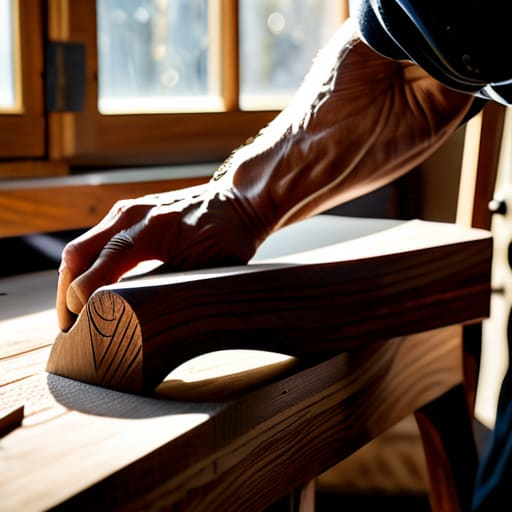
In my studio, there’s a shelf of failed joinery—walnut tenons that were too thin, oak legs that felt too heavy. They are my private graveyard of “almosts.” When I look at a mid-century chair that moves me, I’m not looking for a blueprint to replicate; I’m looking for the logic behind the curve. This is the core of the distinction between copying and influence. To copy is to mimic the surface, to steal the skin without understanding the bone. But to be influenced is to study the skeleton so you can build your own body.
We often mistake the accumulation of skill for a lack of originality, but design is essentially the act of building on existing knowledge. No one sits down at a drafting table as a blank slate. We are all products of our mentors, our libraries, and the objects we’ve touched. When I incorporate a specific taper I saw in a 1950s sideboard, I am not committing a crime; I am engaging in a transformative use of ideas. I am taking a lesson learned by someone else and filtering it through my own constraints, my own hands, and my own mistakes.
The Fine Line Between Creative Inspiration vs Plagiarism
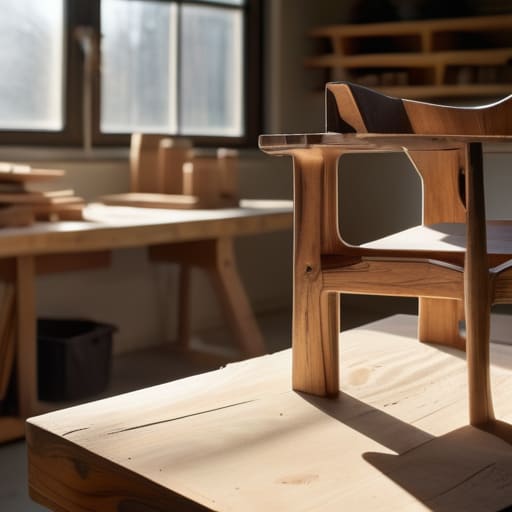
I have a shelf in the corner of my studio, tucked behind a stack of old wood samples, filled with what I call my “failures.” These are the prototypes that didn’t make the cut—the chair with the leg angle that was just slightly too aggressive, or the desk with a joinery detail that looked clever but felt flimsy. When I look at them, I don’t see mistakes; I see the friction required to find a direction. This friction is the crux of the distinction between copying and influence. Copying is a flat, dead thing; it’s the act of tracing a line without understanding the hand that drew it. Influence, however, is more like building on existing knowledge, taking a structural principle you’ve observed and testing it against your own constraints.
The real danger isn’t looking at a masterwork and feeling a spark; it’s the lack of a filter. Plagiarism happens when the designer stops asking “why” and starts asking “how can I replicate this?” To move from mere imitation to a transformative use of ideas, you have to break the thing apart. You have to understand the tension, the material limits, and the intent. If you aren’t wrestling with the idea—if you aren’t feeling that slight ache of deciding which path to take—you aren’t creating; you’re just echoing.
The Near Miss the Transformative Use of Ideas

I have a shelf in the corner of my studio dedicated to what I call “the graveyard.” It’s a collection of failed joints, warped plywood, and chair legs that looked right on paper but felt fundamentally wrong in the hand. When I look at them, I don’t see mistakes; I see the pivot points. This is the essence of the transformative use of ideas. You don’t just take a shape from a mid-century master and replicate it; you take the logic behind that shape—the way a taper meets a grain—and you wrestle it into a new context.
True craft is a process of building on existing knowledge rather than a vacuum of original thought. If I’m designing a new stool, I’m not looking to steal a silhouette; I’m looking to understand how a predecessor solved a structural problem. The distinction between copying and influence lies in that struggle. Copying is a shortcut that bypasses the brain; influence is a dialogue with the past that forces you to make a thousand tiny, difficult decisions. It’s about taking the spark and seeing how it burns in your own hands.
Building on Existing Knowledge the Art of the Pivot
I have a shelf in the corner of my studio filled with what I call my “failed lineages.” There is a walnut chair leg that looks suspiciously like a piece I saw in a Danish monograph back in ’98, and a joinery detail that mimics a mid-century classic. I didn’t steal them; I interrogated them. To me, building on existing knowledge isn’t about a lack of original thought, but rather about standing on the shoulders of those who figured out how to make wood behave. You take a known tension—a specific way a curve meets a joint—and you push it until it breaks or evolves.
The real work happens in that pivot. It’s the moment you realize a form works, but the intent behind it is wrong for your current project. That is the distinction between copying and influence. A copyist stops when they reach the surface level, mimicking the silhouette. An influenced designer, however, deconstructs the logic of the original to see if it can survive a different context. It’s a conversation with the past, not a transcription of it.
The Mentors Shadow the Role of Mentorship in Learning
I remember sitting in a drafty studio in my early twenties, watching a master joiner work. He wasn’t just teaching me how to seat a tenon; he was teaching me how to see the grain. When we talk about the role of mentorship in learning, we often mistake it for a hand-me-down of technique, but it’s actually a hand-me-down of perspective. You aren’t just mimicking his movements; you are absorbing the way he weighs a decision. You see the path he took, and more importantly, you see the path he rejected.
This is where the distinction between copying and influence becomes visceral. A student who merely copies a mentor’s chair is a technician, perhaps even a plagiarist of form. But a student who understands why the mentor chose a specific taper—and then applies that logic to a completely different material—is engaging in the transformative use of ideas. Mentorship provides the scaffolding of existing knowledge, but the goal isn’t to live inside that structure. It is to use it as a launching pad to find your own tension.
The Distinction Between Copying and Influence
In my studio, there is a shelf of “failures”—prototypes where a join was too aggressive or a taper too subtle. When I look at them, I don’t see mistakes; I see the data points of a decision. This is where the distinction between copying and influence becomes tangible. Copying is a mechanical act of replication, a refusal to engage with the why behind a form. It is a shortcut that bypasses the struggle of creation. Influence, however, is a conversation. It’s when I see a mid-century chair with a specific, sweeping curve and I don’t try to recreate that chair, but instead ask myself how that same logic of tension might apply to a contemporary lounge piece.
The difference lies in the labor of translation. Plagiarism is a closed loop—it ends with the object itself. But true influence requires a transformative use of ideas, where the original spark is filtered through your own technical constraints and personal history. If I simply mirror someone else’s work, I am a photocopier. If I use their logic to solve a problem I am facing, I am a designer.
Ethical Intellectual Property Use Choosing the Other Way
In my studio, there is a shelf of “failures”—joints that were too aggressive, wood grains that fought the form, and legs that looked spindly under a load. I keep them because they represent the paths I didn’t take. When I approach a new commission, I find myself looking at the work of others not to replicate their solutions, but to understand the logic of their decisions. This is where ethical intellectual property use actually begins: it’s not about what you take, but how you process what you see.
True integrity lies in the struggle of the pivot. If I see a chair that uses a beautiful, cantilevered tension, I don’t go out and buy the same steel; I ask myself how that tension would behave if it were expressed through bent plywood instead. That is the transformative use of ideas. It’s the difference between a thief who wants the result and a designer who wants to understand the problem. By focusing on the “why” behind a peer’s work rather than the “what,” you ensure that your contribution is an evolution, not a mere echo.
The Weight of the Alternative
Theft is a straight line from one object to another, a hollow mimicry that leaves no trace of the maker. Influence, however, is a messy, jagged detour; it’s the process of looking at a solution someone else found, wrestling with it, and then making the difficult choice to walk a different path because of what you saw. You aren’t stealing their result—you are using their existence to refine your own decision.
Jonathan Marin
The Weight of the Decision
Looking back at the shelf in my studio—the one crowded with those rejected, dust-covered prototypes—I realize that nothing we make exists in a vacuum. We’ve spent this time dissecting the thin, often blurry line between the theft of a finished form and the honest absorption of a concept. Influence isn’t about reaching for someone else’s blueprint to save yourself the labor; it’s about the way a specific curve or a particular joinery technique settles into your own mental framework, waiting for the right moment to be repurposed. We don’t steal when we engage with the lineage of our craft; we only steal when we refuse to do the work of transforming that spark into something that bears our own fingerprints.
In the end, design is less about the sudden lightning bolt of originality and more about the quiet, iterative process of choosing. Every piece of furniture I’ve ever shipped out into the world is a collection of a thousand tiny pivots—decisions that were informed by the masters who came before me, but ultimately pushed toward a different horizon. Don’t be afraid of the shadows cast by your predecessors. Instead, focus on that tension, that near-miss where you could have followed their path but chose to veer just slightly to the left. That is where your voice actually begins.
