
Designing to Be Mended
I was clearing out a corner of my studio last Tuesday when I tripped over a prototype chair from 2008—a heavy, oak-veneer mess that I’d rejected because the joints were glued so aggressively they were essentially permanent. I kept it, of course, tucked away with its label: “Impossible to service.” It’s a frustrating reminder that in modern manufacturing, we often mistake “seamlessness” for quality. We’ve been sold this lie that a sleek, unblemished surface is the pinnacle of achievement, but when you look closer, you realize that what repairability says about a design is actually a measure of how much the maker respected the user. A product you can’t open is just a product you’re destined to throw away.
I’m not interested in lecturing you on sustainability from a high-minded, theoretical perspective. Instead, I want to talk about the friction of making things that last. Over the next few sections, I’ll be sharing what I’ve learned from twenty years of navigating the tension between elegant aesthetics and the brutal reality of a screwdriver. We’re going to look past the marketing gloss to see the true integrity of an object by examining the decisions that allow it to survive its own use.
The Ghost of the Easy Way Out Why Repairability Defines Design
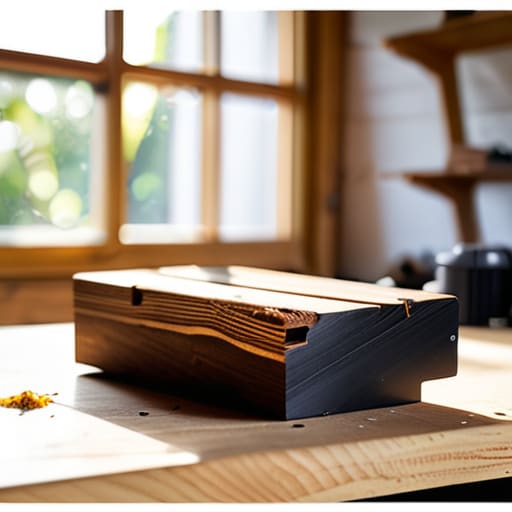
I have a shelf in my studio filled with what I call “the ghosts.” They are the failed iterations of chairs and lamps—the ones where I chose a beautiful, complex mortise-and-tenon joint over a simple, cheap metal bracket. Looking at them, I’m reminded that most modern objects aren’t designed to be maintained; they are designed to be replaced. When a manufacturer opts for a snap-fit plastic housing that can’t be opened without shattering, they aren’t just making a technical choice. They are making a moral one. It is the silent implementation of planned obsolescence in product design, where the ease of the assembly line is prioritized over the longevity of the object in a person’s home.
To me, a screw is more than a fastener; it is a promise. It’s a sign that the designer acknowledges the object exists in a world where things break, wear down, and eventually need care. Embracing modular design benefits isn’t just about being trendy or following circular economy principles; it’s about resisting the urge to hide the mechanics of an object behind a seamless, impenetrable facade. The most honest designs are the ones that leave a way back in.
The Violence of Planned Obsolescence in Product Design

There is a specific kind of violence in a product that is designed to die. It isn’t a physical blow, but a quiet, structural betrayal. When I look at a piece of furniture or a consumer electronic, I’m looking for the seams—the places where a human being could intervene. But too often, we see the fingerprints of planned obsolescence in product design, where the assembly is intentionally obscured by proprietary screws or, worse, permanent adhesives. It feels less like engineering and more like a hostage situation; you don’t own the object, you’re merely renting its utility until the first capacitor fails and the entire unit becomes a brick.
This isn’t just a failure of ethics; it’s a failure of imagination. We’ve been taught to prioritize the “clean” aesthetic of a seamless, unopenable shell, sacrificing the consumer right to repair on the altar of minimalism. In my studio, I keep a drawer of failed joinery—pieces where I initially chose a glue that was too aggressive, making the wood impossible to resurface. I learned then that a design that cannot be undone is a design that has no future. We need to stop designing for the moment of sale and start designing for the entirety of the object’s life.
Winning the War Against the Disposable Sustainable Engineering Practices
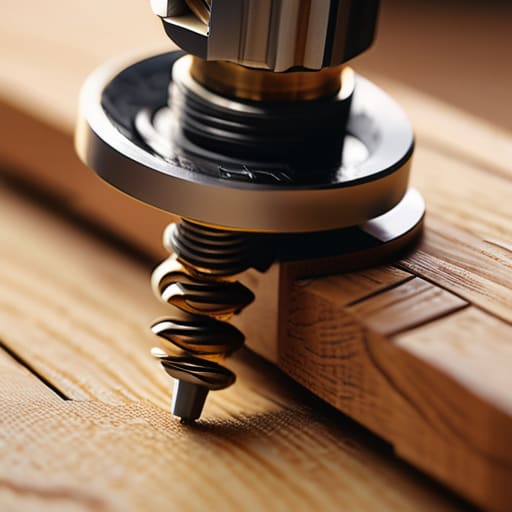
When I look at a piece of joinery, I’m not just looking at the finished wood; I’m looking for the evidence of a struggle. True sustainable engineering practices don’t happen by accident or through a marketing department’s checklist. They happen in the quiet, frustrating hours when a designer decides to fight for a screw boss instead of a snap-fit plastic clip. It is a deliberate choice to embrace modular design benefits, even when it adds three cents to the unit cost or an extra minute to the assembly line. That extra minute is where the soul of the object lives.
We talk a lot about the circular economy principles as if they are some grand, sweeping movement, but in the studio, it’s much more granular. It’s about the foresight to realize that a component might fail in five years and ensuring that failure doesn’t necessitate the death of the entire object. To me, a design that respects the consumer right to repair is a design that respects the person using it. It moves us away from the era of the “black box” and back toward a world where we actually own the things we bring into our homes.
The Elegance of Modular Design Benefits Over Static Perfection
We have this obsession with the “perfect” object—a seamless, monolithic thing that looks like it was carved from a single block of stone. In my early years in the studio, I chased that ghost. I wanted joints so tight and surfaces so continuous that you couldn’t tell where one part ended and the next began. But there is a quiet violence in that kind of perfection; it’s a trap. When a monolithic object fails, it fails completely. You can’t fix a single broken tooth in a gear if the entire housing is ultrasonically welded shut.
This is where the true beauty of modular design benefits reveals itself. It isn’t about looking like a collection of Lego bricks; it’s about the intelligence of the interface. A well-designed module acknowledges its own mortality. By embracing circular economy principles, we stop designing for a single, glorious moment of arrival and start designing for a long, messy, and useful life. The elegance isn’t in the stillness of the object, but in its ability to evolve, to swap a worn-out component for a new one, and to remain relevant long after the initial trend has faded.
Circular Economy Principles the Choice to Build for Forever
I have a shelf in the corner of my studio filled with what I call my “failures”—prototypes where a joint was too complex or a material too temperamental. They are physical reminders that every design is a series of concessions. When we talk about circular economy principles, we aren’t just talking about recycling bins or clever marketing; we are talking about the fundamental decision to stop designing for the landfill. It is an intentional shift from a linear “take-make-waste” mindset to one where the object is merely a temporary custodian of materials.
True sustainability isn’t a feature you bolt onto a product at the end of the assembly line; it’s baked into the initial product lifecycle assessment. If I design a chair thinking about how it will be disassembled in thirty years, the entire geometry changes. You stop looking for the quickest way to bond two surfaces and start looking for the most honest way to connect them. Choosing to build for forever means acknowledging that the most radical thing a designer can do today is to create something that refuses to die.
The Moral Weight of the Consumer Right to Repair
I spent three weeks last month staring at a broken chair joint in my studio, wondering if I had designed a piece of furniture or a ticking time bomb. It’s a heavy thought. When we talk about the consumer right to repair, we aren’t just arguing about screwdriver access or proprietary bits; we are arguing about the ownership of intent. When a designer creates something that cannot be mended, they are essentially making a silent pact with the landfill. They are deciding, long before the customer even opens the box, that the object’s life has a pre-determined expiration date.
There is a quiet dignity in a tool that can be serviced. It acknowledges that the user is a steward, not just a temporary occupant of a product’s lifecycle. To deny repairability is to strip the user of their agency, turning them into a mere passenger in a cycle of consumption. We often treat a product lifecycle assessment as a sterile, mathematical exercise, but it’s actually a deeply moral one. Every time we choose a permanent adhesive over a mechanical fastener, we are making a choice about how much respect we owe the person who will eventually have to live with our mistakes.
A Product Lifecycle Assessment of Our Hardest Decisions
When I sit down to perform a formal product lifecycle assessment, I’m not just looking at spreadsheets or carbon footprints; I’m looking at the ghosts of the decisions I didn’t make. In my studio, there is a shelf of “almosts”—chairs with joints that were too expensive to machine, or lamps where the housing was snapped together rather than screwed. On paper, the snapped housing is a win for assembly speed. In reality, it’s a death sentence for the object. A true assessment requires looking past the initial manufacturing cost to see the moment an item becomes trash.
The hardest part of this work is resisting the gravity of the easy path. It is tempting to let planned obsolescence in product design dictate the rhythm of a production line because it satisfies the immediate bottom line. But when I trace a piece from the raw timber to its eventual disposal, I realize that every choice to use a permanent adhesive over a mechanical fastener is a choice to shorten its story. We aren’t just designing objects; we are designing their eventual funerals.
The Anatomy of Intent
When I look at a piece of furniture, I don’t just see the joinery that holds it together; I see the ghost of the glue that was rejected. A design that allows itself to be opened, understood, and mended is a design that respects its own longevity—it is a quiet, structural confession that the maker intended for the object to outlive the moment it was bought.
Jonathan Marin
The Residue of Intent
Looking back at the scrap heap in the corner of my studio, I see more than just failed joints and mismatched veneers; I see the battlefield of intent. We have spent the last few sections dissecting how repairability isn’t just a technical specification or a legal checkbox, but a profound statement of how much we respect the user. From the modularity that defies the violence of obsolescence to the moral weight of the right to repair, it becomes clear that every screw we choose to expose is a small, quiet rebellion against the culture of the disposable. When we design for the repair, we are essentially refusing to let the object die just because a single component failed.
Ultimately, a truly great design shouldn’t aim for a sterile, untouchable perfection that breaks the moment it’s challenged. Instead, it should possess a certain grace in its aging—a capacity to be understood, unmade, and made whole again. I’ve learned that the most beautiful things in my workshop aren’t the ones that stay pristine, but the ones that carry the scars of maintenance. As designers, our legacy shouldn’t be measured by how many units we move, but by the longevity of the conversations we start between a person and their belongings. We aren’t just making products; we are deciding what is worth keeping.
