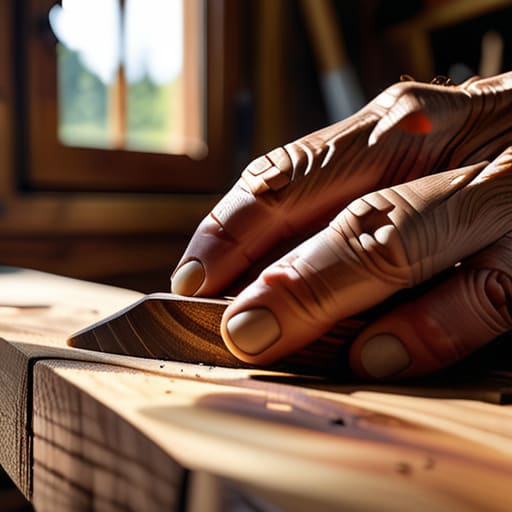
Choosing Boards for a Specific Piece
I spent three weeks last autumn staring at a slab of black walnut, convinced that its grain pattern was the soul of the chair I was building. I had the sketches, the joinery planned, and the budget set. Then, I saw a piece of reclaimed ash that looked nothing like my vision, yet it held a certain gravity that the walnut lacked. That’s the trap people fall into when they try to learn how to choose timber for a design; they look for the “perfect” match in a catalog rather than listening to the material itself. Most textbooks treat timber selection like a math problem, but in a real studio, it’s more like a negotiation with a stubborn partner.
I’m not here to give you a checklist of moisture contents or a guide to expensive exotic species that will eventually crack and disappoint you. Instead, I want to talk about the tension between what you want a piece to be and what the wood actually allows it to become. I’ll share what I’ve learned from twenty years of making mistakes—and keeping the ones that failed—so you can understand the near misses that actually define a good design.
The Near Misses How to Choose Timber for a Design
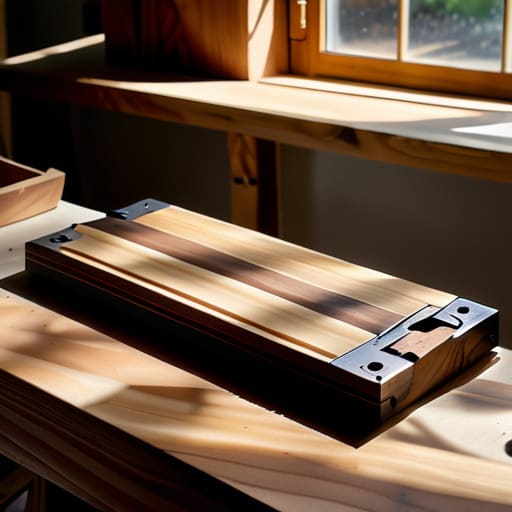
I have a shelf in the back of my studio, tucked behind the letterpress, filled with offcuts and failed joints. Most people see them as waste, but to me, they are a map of my indecision. When I’m staring down a new commission, the process isn’t about finding the “perfect” grain; it’s about navigating the tension between what looks good in a render and how the material actually behaves. You start by weighing the hardwood vs softwood characteristics, not just for the strength, but for how they hold a line. A piece of walnut has a certain gravity, a way of demanding respect, whereas a pine might offer a lightness that almost feels deceptive if you don’t account for its tendency to move.
The real struggle usually lies in the invisible stuff—the wood moisture content and stability that dictates whether a joint will hold or slowly tear itself apart over the next decade. I’ve spent weeks agonizing over a species, only to realize that the very thing I loved about its aesthetic properties was exactly what would make it a nightmare for the production line. It’s a constant negotiation between the eye and the physics of the grain.
The Tension of Hardwood vs Softwood Characteristics
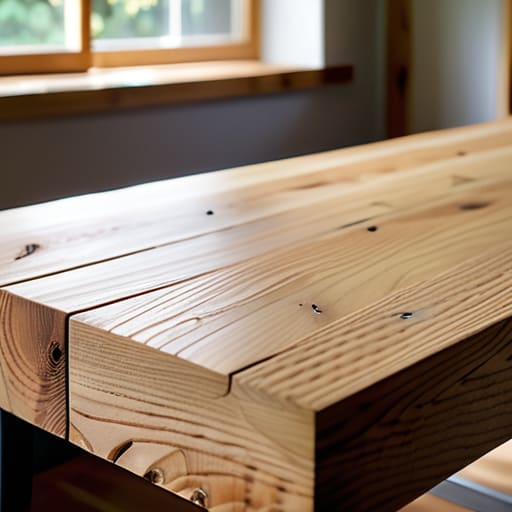
I spent most of last Tuesday staring at a slab of white oak and a piece of reclaimed pine, trying to decide if the project needed the structural ego of the former or the quiet humility of the latter. People love to talk about the technicalities of hardwood vs softwood characteristics, as if it’s a simple binary of density and hardness. But in the studio, it’s more about how the material handles the passage of time. A hardwood offers a certain permanence, a way to anchor a room, whereas a softwood can feel more ephemeral, almost breathing with the space around it.
The real tension, though, lies in the trade-off between aesthetic intent and long-term reality. You might fall in love with the grain of a specific species, but if you haven’t accounted for its wood moisture content and stability, that beautiful design is just a ticking clock. I have a drawer full of joinery samples that failed precisely because I prioritized the visual warmth of a softer wood over the mechanical necessity of a harder one. You have to respect the physics of the material before you can claim to be designing with it.
Chasing Wood Species Aesthetic Properties That Almost Failed
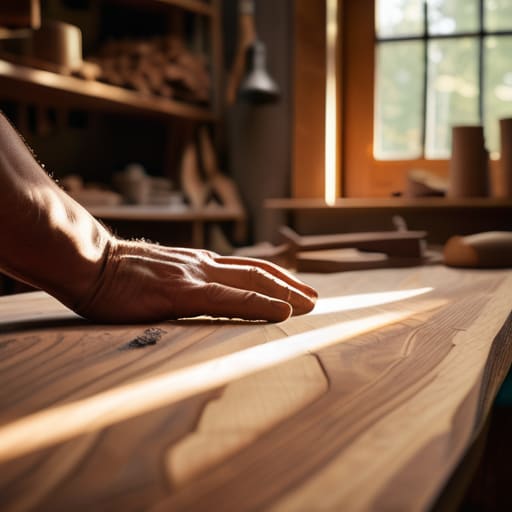
I have a shelf in the back of the studio, tucked behind the scrap bin, filled with offcuts that never made the cut. They aren’t failures of craftsmanship, but failures of intent. I remember a dining table project last autumn where I spent three weeks obsessed with a particular rift-sawn walnut. I was chasing a specific grain continuity that felt almost spiritual, but the more I looked at it, the more I realized the wood species aesthetic properties were fighting the geometry of the joinery rather than serving it. I nearly committed to it, convinced that the visual payoff would justify the headache, before realizing I was designing for the wood instead of the person sitting at the table.
It is a delicate dance between the visual and the structural. You can fall in love with the way a grain dances under a light oil finish, only to be reminded that timber durability for interior design isn’t just about looks; it’s about how that piece survives a decade of spilled wine and heavy leaning. I’ve walked away from beautiful, exotic specimens because their movement was too unpredictable, choosing instead a more stable, predictable species that allowed the design to actually breathe.
The Risk of Wood Moisture Content and Stability
I have a shelf in the back of the studio dedicated to what I call “the casualties of physics.” Most of them are beautiful pieces of walnut or oak that looked perfect on the workbench, only to warp into something unrecognizable three months later. It is the silent, humbling reality of wood moisture content and stability. You can spend weeks perfecting a joinery detail, but if you haven’t accounted for how that specific piece will breathe once it leaves the controlled environment of the shop, you aren’t designing; you’re just gambling.
There is a specific kind of anxiety that comes with selecting timber for a client’s permanent installation. You start to look past the grain and begin obsessing over the cellular memory of the wood. I’ve learned that stability is often more important than beauty. A piece might have stunning visual movement, but if it lacks the structural integrity to handle seasonal shifts, it becomes a liability. When I consider timber durability for interior design, I’m not just thinking about how it resists a scratch; I’m thinking about how it survives the inevitable, slow dance of expansion and contraction.
Defining Timber Durability for Interior Design Decisions
There is a specific kind of anxiety that sets in when a client asks for a dining table that will “last a lifetime.” In my studio, that request usually triggers a mental audit of every scratch and dent I’ve ever seen in a finished piece. People often conflate beauty with resilience, but timber durability for interior design isn’t just about how hard a species is on the Janka scale; it’s about how it ages under the friction of actual life. I once spent three weeks designing a series of stools in a beautiful, pale ash, only to realize mid-prototype that the grain density wouldn’t survive a decade of heavy foot traffic. I ended up pivoting to a much denser, darker timber—a decision that felt like a compromise at the time, but proved to be the only way to honor the design’s intent.
It’s a delicate balancing act between the tactile warmth of the surface and the structural reality of the material. You can lean into the soft, yielding nature of certain species to highlight natural wood textures in architecture, but you have to be honest about where that piece will live. A sideboard in a protected hallway can afford to be more temperamental than a bench in a high-traffic entryway. If you don’t account for that tension early, you aren’t designing a piece of furniture; you’re designing a future regret.
The Ethical Pivot of Sustainable Timber Sourcing
I remember a chair I was prototyping five years ago—a slim, tapered piece that relied entirely on the structural integrity of a specific walnut. I had the species selected, the aesthetic properties were perfect, and the grain matched my vision. But when I finally dug into the supply chain, I realized the timber was being harvested from a region where the regenerative cycles were being ignored for the sake of quick yield. I ended up scrapping the entire design. It felt like a failure at the time, but looking at my shelf of rejects now, that chair stands as a reminder that a beautiful object loses its soul if its origin is a lie.
True sustainable timber sourcing isn’t just about checking a box for a certification; it’s about the quiet tension between what we want and what the land can actually afford to give us. We often get caught up in the immediate technicalities—calculating wood moisture content and stability or debating the merits of certain species—but we forget that the material has a history that precedes our studio. Choosing a piece of wood is a pact. If you ignore the ethics of the source, you aren’t just designing furniture; you’re designing a legacy of depletion.
Capturing Natural Wood Textures in Architectures Final Form
There is a specific kind of tension that occurs when you move from a single chair in a studio to the sweeping, tactile surfaces of a built environment. When we talk about natural wood textures in architecture, we aren’t just talking about a finish; we are talking about how a person’s hand feels as they brush against a handrail or a wall cladding. I remember a project where we spent three weeks debating a wire-brushed finish versus a smooth, oil-rubbed surface. We almost went with the brush—it felt “architectural”—but the grain was so aggressive it felt like it was fighting the room rather than settling into it.
The mistake most people make is treating texture as a static property. In reality, it’s a conversation between the wood species aesthetic properties and the light hitting them at four in the afternoon. If you choose a grain that is too busy, the architecture loses its ability to provide a sense of calm. You have to find that delicate equilibrium where the wood feels substantial enough to be permanent, yet soft enough to invite touch. It’s about the decision to step back from the “obvious” texture in favor of something that actually breathes with the space.
The Ghost in the Grain
Choosing timber isn’t about finding a material that meets a checklist; it’s about navigating the tension between what the wood wants to do and what the design demands. You don’t truly know you’ve made the right choice until you look at the finished piece and realize just how close you came to picking something else entirely.
Jonathan Marin
The Final Grain
Choosing timber isn’t a linear checklist; it is a series of negotiations between what the material wants to do and what the design demands. We’ve looked at the technicalities—the moisture content that can ruin a joint, the ethical weight of a species, and the structural tension between hardwood and softwood—but those are just the parameters of the cage. The real work happens in the margins, where you weigh the aesthetic allure of a grain pattern against its long-term stability. You have to respect the inherent volatility of the medium, acknowledging that every choice you make is a compromise between the ideal vision and the physical reality of the wood.
In my studio, the most meaningful pieces aren’t the ones that went perfectly according to the CAD drawing. They are the ones that survived a moment of doubt, where I almost reached for a different species or a different finish, only to realize that the tension of the “almost” is what gives the object its soul. Don’t aim for a design that is technically flawless and utterly sterile. Instead, aim for the piece where the decisions are visible—where the material and the maker met in a moment of high stakes. That is where true craft lives.
