Bookkeeping That Takes an Hour a Month
I remember sitting in my studio three years ago, surrounded by the scent of freshly sawn walnut and the quiet hum of the workshop, staring at a shoebox full of crumpled receipts. I had spent the entire morning perfecting the joinery on a dining chair, only to spend the afternoon paralyzed by the sheer, messy dread of trying to figure out how to keep accounts as a sole trader. There is this pervasive, polished myth in the business world that you need a high-priced accountant or a complex, subscription-heavy software suite just to exist. It’s a lie that treats bookkeeping like a grand, intimidating architecture, when in reality, it’s more like maintaining your tools—if you neglect them, the whole shop eventually grinds to a halt.
I’m not here to sell you on a digital ecosystem or a complicated spreadsheet template that requires a degree to navigate. Instead, I want to talk about the functional reality of the work. I’m going to share the stripped-back, manual methods I’ve used to keep my own studio solvent without losing my mind. This isn’t about theoretical perfection; it’s about building a system that is robust enough to endure the inevitable chaos of a creative life.
The Split Decision Separating Personal and Business Finances
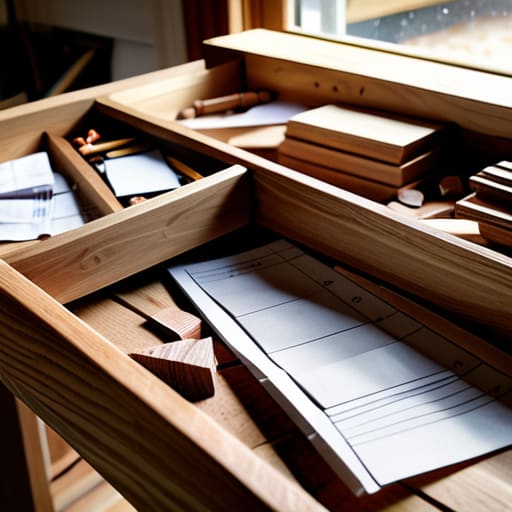
I have a drawer in my studio filled with failed joinery samples—slight miscalculations in angles that made a chair impossible to sit in. In my early years of freelancing, my bank account was exactly like that drawer: a cluttered mess of grocery runs, lumber costs, and rent payments all tangled together. I thought I could just sort it out at the end of the year, but that was a design flaw in my entire process.
I eventually realized that separating personal and business finances isn’t just about being “organized”; it’s about clarity of vision. When you use one account for everything, you lose the ability to see the actual shape of your work. You can’t accurately gauge your cash flow management if your profit is being obscured by a sudden trip to the hardware store or a weekend away.
I almost kept doing it my way—the messy way—until a particularly stressful afternoon spent hunting for a single coffee receipt during tax season convinced me otherwise. Now, I treat my business account like a clean workbench. It’s a dedicated space where every movement is intentional, making the task of managing business expenses feel less like a chore and more like a standard part of the craft.
The Ghost in the Machine Choosing Sole Trader Bookkeeping Software
I spent three weeks debating whether to stick with my battered Excel spreadsheet or finally bite the bullet on some dedicated sole trader bookkeeping software. There is a certain tactile comfort in a manual system—much like the resistance of a heavy printing press—but the reality of modern tax is too unforgiving for nostalgia. I almost convinced myself that a manual ledger was more “authentic,” but that was a designer’s vanity talking, not a business owner’s logic.
The pivot happened when I realized that managing business expenses shouldn’t feel like a forensic investigation at the end of every quarter. I needed a tool that acted less like a rigid instructor and more like a reliable workbench. Now, instead of drowning in a sea of paper, I use an app to snap photos of every invoice. It turns the chore of keeping business receipts from a looming mountain into a series of small, manageable tasks. It isn’t about the bells and whistles; it’s about removing the friction between my work and the inevitable reality of the taxman.
The Cost of Chaos Managing Business Expenses Without Regret
I have a drawer in my studio filled with failed joinery samples—mahogany pieces that were just a fraction too heavy or a bevel too aggressive. I keep them because they represent the moment a design almost failed. Managing business expenses feels remarkably similar. There is a specific kind of vertigo that sets in when you realize you’ve lost the thread of where your money actually went. I used to treat my business spending like a loose sketch, assuming I could just tidy it up when tax season rolled around. But chaos is expensive, and the mental tax of trying to reconstruct a year of transactions is far higher than the cost of a disciplined system.
When I’m managing business expenses, I’ve learned that the real danger isn’t the big purchases, but the leakage of small, unrecorded costs. A coffee here, a specialized tool there—if you aren’t keeping business receipts with the same rigor I apply to my material specs, you’re essentially designing your finances with missing dimensions. It makes the eventual dread of self-assessment tax returns much more manageable when you aren’t playing detective with your own bank statement.
The Paper Trail the Art of Keeping Business Receipts
I have a shelf in my studio dedicated to failed joinery—mahogany scraps and miscalculated bevels that never made the cut. I keep them because they represent the moment a design almost failed. I’ve realized that keeping business receipts is remarkably similar. A crumpled thermal slip from a hardware store isn’t just trash; it’s the physical proof of a decision made in the heat of a project. If I lose that slip, I lose the ability to defend my costs when the tax man comes knocking.
I used to treat my receipts like scrap wood, tossing them into a shoebox and hoping for the best. It was a disaster of unorganized chaos that made my end-of-year self-assessment tax returns feel like a forensic investigation rather than a simple filing. Now, I treat them with the same discipline I apply to a blueprint. Whether I’m snapping a photo for my sole trader bookkeeping software or tucking a physical invoice into a labeled folder, I’m not just archiving paper; I’m protecting the integrity of my work.
How to Keep Accounts as a Sole Trader With Intention
I’ve spent most of my career obsessing over the tension between a material’s strength and its weight, but I’ve realized that bookkeeping requires a similar kind of structural integrity. It isn’t enough to just record numbers; you have to approach it with a sense of purpose. For me, that means treating my ledgers with the same rigor I apply to a joinery detail. If I treat my finances as an afterthought, the whole structure of my business begins to feel flimsy.
Effective cash flow management for freelancers isn’t about being a math prodigy; it’s about the discipline of the routine. I used to think I could just “deal with it” at the end of the quarter, but that’s how you lose the thread of your own progress. Now, I set aside time every Friday—not to crunch numbers, but to ensure the narrative of my work is accurately reflected in the data. By integrating these small, intentional checks, I’m not just preparing for self-assessment tax returns; I’m actually learning how to breathe within the constraints of my own business.
The Survival Rhythm Masterful Cash Flow Management for Freelancers
I remember a period early in my studio years when I mistook a healthy bank balance for actual profit. I had just finished a large commission, the funds were sitting there, and I felt invincible. I almost used that windfall to upgrade my workshop tools, a decision that would have been a beautiful mistake. But then I looked at my upcoming tax obligations and realized that money wasn’t mine; it was just passing through. Effective cash flow management for freelancers isn’t about how much you make, but about understanding the lag between the work performed and the money actually landing.
It’s a rhythm, much like the steady pressure of a letterpress. You have to anticipate the dry spells. I’ve learned to treat my tax provisions as a separate, untouchable entity, long before the dreaded deadline for self-assessment tax returns looms. If you don’t build a buffer into your mental model of “available funds,” you aren’t designing a business; you’re just managing a series of expensive accidents. You have to learn to live on the predictable parts of your income, leaving the spikes to act as the structural support for the lean months.
The Final Reckoning Navigating Self Assessment Tax Returns
There is a specific kind of dread that settles in when the tax year draws to a close. It’s a heavy, tactile feeling, much like the weight of a failed casting or a piece of timber that’s too brittle to work. For a long time, I viewed self-assessment tax returns as a purely administrative hurdle, a nuisance to be cleared. But I’ve learned that the tax return is actually the final blueprint of your year. If your records are a mess of loose scraps and half-remembered transactions, the return becomes a source of anxiety rather than a moment of clarity.
I remember a year when I tried to “tidy up” my figures just days before the deadline. It was a disaster of guesswork. Now, I treat the end of the year like the final sanding of a chair; you can only achieve a smooth finish if the structural work was done correctly months ago. By consistently managing business expenses and maintaining a clean digital trail throughout the year, the actual filing process becomes less of a reckoning and more of a simple, quiet verification of the work you’ve already done.
The Architecture of the Ledger
I used to think bookkeeping was just a chore to keep the taxman at bay, but I’ve realized it’s actually the most honest blueprint you’ll ever draw; it’s the difference between building a life on a solid foundation and trying to balance a heavy oak table on a pile of loose sketches.
Jonathan Marin
The Finished Piece
Looking back at the whole process—from the initial split of my personal bank accounts to the rhythmic, almost meditative task of filing receipts—it becomes clear that bookkeeping isn’t just a chore. It is the scaffolding that holds the creative work upright. We’ve talked about choosing the right software, managing the relentless flow of cash, and facing the tax man without that familiar knot of dread in the stomach. Each of these steps is a deliberate constraint placed upon the chaos of being your own boss. I used to think that being a designer meant ignoring the ledger, but I’ve learned that true professional freedom is actually built on the foundation of meticulous, even boring, administrative discipline.
In my studio, I keep a drawer full of failed chair legs and warped joints, each one a testament to a choice I didn’t make. I think of my accounts in much the same way. The way you manage your money today is the decision that prevents a catastrophic failure tomorrow. Don’t view these systems as a distraction from your craft; view them as the essential framework that allows your craft to exist in the first place. When the numbers align and the paper trail is clean, you aren’t just a person with a hobby—you are a maker with a practice, and there is a profound, quiet dignity in that.
