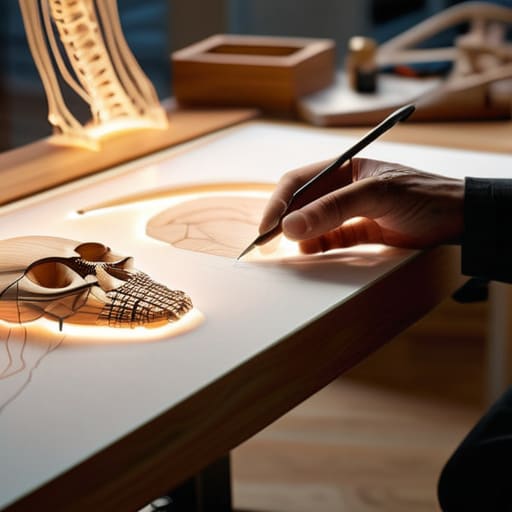
Designing a Chair Around a Person
I was staring at a prototype of a lounge chair last Tuesday—one of the many “failures” currently occupying a corner of my studio—realizing that the industry’s obsession with ergonomic data is a massive distraction. We are constantly bombarded with charts, degree angles, and expensive software meant to solve the puzzle of human comfort, as if a mathematical formula could ever truly capture the way a person settles into a seat after a long day. Most people think learning how to design for the body is about following a set of rigid, clinical rules, but that’s a lie. In reality, it is a messy, intuitive negotiation between a physical object and the unpredictable way we actually live in it.
I’m not here to sell you on a new piece of CAD software or a textbook of anthropometric measurements. Instead, I want to talk about the friction—the moments where a design almost fails and the specific, difficult choices that saved it. I’m going to share what I’ve learned from twenty years of making things that people actually touch, focusing on the small, decisive pivots that separate a piece of furniture from a functional extension of the self.
The Near Misses How to Design for the Body
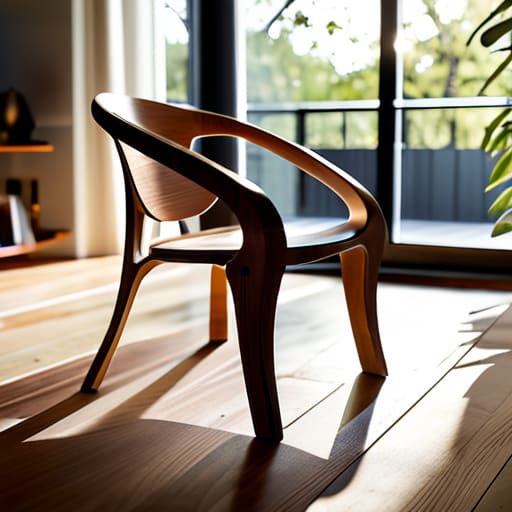
I remember a prototype for a lounge chair sitting in the corner of my studio last Tuesday—a bentwood frame that looked elegant but felt like a torture device after twenty minutes. It was a classic case of prioritizing silhouette over musculoskeletal health in design. I had been staring at the CAD models, convinced the line was perfect, only to realize I had ignored the actual geometry of a resting spine. I almost sent that version to production because it looked “right” in a sketchbook, but the body doesn’t care about sketches.
Designing for the human form isn’t about following a manual; it’s about negotiating with the tension between aesthetics and reality. You can lean on anthropometric data in design all day long to get your base measurements, but those numbers are just a starting point. The real work happens in the margins—the tiny, agonizing adjustments to a lumbar curve or the subtle tilt of a seat pan. It’s in those near-misses, where a design almost becomes a beautiful piece of sculpture instead of a functional tool, that you actually learn how to respect the person sitting in it.
Rejecting the Average the Trap of Anthropometric Data in Design
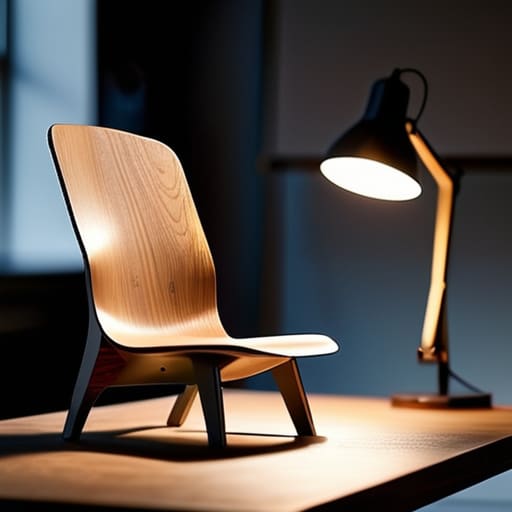
I have a shelf in the back of my studio dedicated to what I call the “statistical ghosts.” They are the prototypes built strictly according to the spreadsheets—chairs and stools that followed every rule of anthropometric data in design to the letter, yet felt utterly lifeless. When you design for the “average” human, you aren’t actually designing for anyone; you are designing for a mathematical phantom that exists only in a textbook. I remember a task chair I developed five years ago that met every single metric for musculoskeletal health in design, yet when I sat in it, I felt an immediate, inexplicable urge to stand up.
The problem is that data tells you where a person’s joints sit, but it tells you nothing about how they move. If we lean too heavily on human factors engineering as a rigid checklist, we end up with objects that are technically “correct” but intuitively wrong. Real comfort isn’t a static measurement; it is a negotiation between the object and the living, shifting weight of a person. True design happens in the margins, in the space where the data ends and the actual, messy experience of sitting begins.
The Pivot Toward True Postural Support Principles
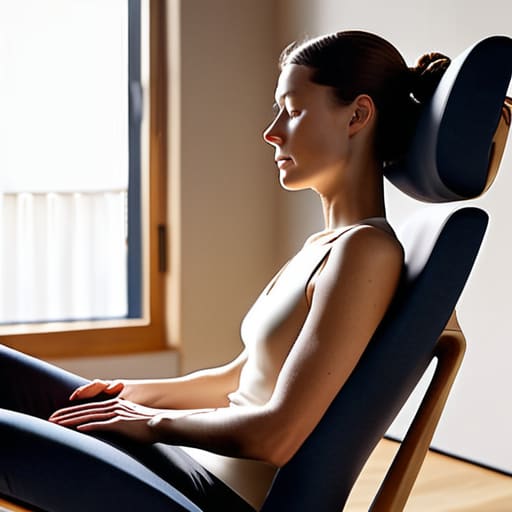
Once you stop treating the human body like a collection of static averages, the work shifts from math to something much more intuitive. I remember a chair I was prototyping back in ’08; I had spent weeks obsessing over the seat height based on standard charts, only to realize the user felt like they were floating, disconnected from the floor. That was my pivot. I had to stop looking at spreadsheets and start looking at how a spine actually negotiates gravity. It isn’t about hitting a target number; it is about understanding postural support principles as a dynamic conversation between the sitter and the structure.
True design happens in that tension. When we lean into human factors engineering, we aren’t just trying to prevent a sore back; we are trying to facilitate a state of being where the furniture disappears. I’ve kept a prototype in the corner of my studio for years—a stool with a seat angle that was just three degrees too steep. It failed every ergonomic test, yet it taught me more about the nuance of weight distribution than any textbook ever could. It forced me to realize that support isn’t a fixed state, but a constant, subtle adjustment.
Where Human Factors Engineering Meets Intuitive Form
There is a tension in my studio between the rigid math of human factors engineering and the way a person actually settles into a chair when they think no one is watching. You can run every simulation in the book, but a spreadsheet can’t feel the subtle shift of weight when someone leans back to think. I’ve found that the most successful pieces aren’t just compliant with a checklist; they respect the unpredictability of human movement.
I often find myself staring at a prototype—one of the many “failures” currently gathering dust on my shelves—trying to bridge that gap. It’s one thing to satisfy the requirements of musculoskeletal health in design, but it’s quite another to create a form that feels like an extension of the self rather than a medical device. The goal isn’t just to prevent pain through strict geometry, but to achieve a seamless marriage of technical precision and tactile intuition. If the form feels too clinical, the user remains aware of the machine; if it’s too organic, it loses its structural integrity. The sweet spot lives in that narrow, difficult margin where the math finally stops arguing with the soul.
The Friction of User Centered Design Methodology
There is a particular kind of exhaustion that comes from the friction inherent in any true user-centered design methodology. It isn’t the physical labor of the workshop, but the mental grinding that occurs when you try to reconcile a beautiful, sculptural silhouette with the stubborn realities of human biology. I remember a specific lounge chair project where the silhouette was nearly perfect, but the lumbar curve felt like a lie. To fix it, I had to compromise the very line that made the piece interesting. It felt like a defeat at the time, but looking back at that rejected prototype in my studio, I realize that the tension between form and function is where the integrity of the object is actually forged.
We often treat design as a linear progression, but it’s more like a constant negotiation with discomfort. When you move beyond mere aesthetics into the realm of musculoskeletal health in design, you stop designing for an idealized figure and start designing for the messy, asymmetrical reality of a living person. It’s a messy, iterative process of trial and error that often feels like you are fighting against your own creative instincts just to ensure the user doesn’t end up in pain by mid-afternoon.
Choosing Comfort Physical Workspace Optimization Through Tension
I have a shelf in the back of my studio dedicated to what I call “the failures of ease.” There is a chair leg there, carved with a radius so smooth it felt like silk, but it lacked the necessary resistance to keep a sitter from sliding into a slouch. It taught me that comfort isn’t the absence of effort; it is the management of it. When we talk about physical workspace optimization, we often mistake “softness” for “support.” But true support requires a certain degree of controlled tension.
If a surface is too compliant, the body never finds its center; it just sinks into a state of passive collapse. I’ve spent weeks iterating on task chairs where the goal wasn’t to eliminate pressure, but to distribute it through intentional resistance. This is where the nuances of musculoskeletal health in design actually manifest. It’s not about a plush cushion; it’s about the structural tension that tells your muscles they can finally let go because the object is doing the heavy lifting. We aren’t designing for a body at rest, but for a body in the middle of a long, difficult day.
The Final Call for Musculoskeletal Health in Design
At the end of the day, we have to stop treating musculoskeletal health in design as a checkbox for a compliance manual. It isn’t about meeting a standard; it’s about the quiet, long-term relationship between a spine and a chair. I look at the prototypes gathering dust in the corner of my studio—the ones where I pushed a lumbar curve just a fraction too far—and I realize that true design success is measured in the absence of pain. We aren’t just building objects; we are building the environments that dictate how a person feels when they wake up ten years from now.
If we lean too heavily on the math, we lose the person. We can obsess over human factors engineering until our eyes blur, but if the result feels clinical rather than intuitive, we’ve failed. The goal isn’t to create a perfect medical device, but to facilitate a sustainable way of being within a space. It requires a constant, restless vigilance—a commitment to the idea that the most profound design is often the one that disappears into the natural rhythm of the human frame.
The Ghost in the Measurements
We spend so much time obsessing over the averages in a spreadsheet, forgetting that a person isn’t a collection of data points; they are a series of shifting tensions, sudden leans, and restless movements. Designing for the body isn’t about hitting a mathematical target—it’s about respecting the beautiful, unpredictable way a human actually inhabits a space.
Jonathan Marin
The Ghost in the Machine
Looking back at this journey from rigid anthropometric data to the nuanced reality of human movement, it becomes clear that designing for the body isn’t about solving a mathematical equation. It is about acknowledging the messy, shifting tension between a static object and a living organism. We have moved past the era of designing for the “average” user—a ghost that never actually sits in our chairs—and toward a deeper understanding of postural integrity and intuitive form. To design well is to respect the friction, to embrace the constraints of our own biology, and to realize that true ergonomic success lies in the delicate balance of support and freedom.
Ultimately, my shelves are crowded with the ghosts of failed ideas—the prototypes that were too stiff, too aggressive, or too polite. But those rejects taught me that a chair is never just a chair; it is a silent partner in the way we inhabit our lives. As you move forward with your own work, remember that the most profound designs are often those that feel inevitable, yet were born from a thousand difficult, agonizing choices. Don’t just aim for comfort; aim for a design that understands the weight of being human. The goal isn’t to eliminate the struggle of the body, but to design with its rhythm in mind.
