
What I Would Say to Myself at Twenty
I spent most of my twenties thinking I needed a high-end studio, a suite of expensive software, and a massive library of “inspiration” to be taken seriously. It’s a lie we tell ourselves to justify the delay of actually doing the work. Most of the advice you’ll find online focuses on the tools or the software, but if I’m being honest about what I would tell someone starting, it’s that the tools are often just a way to procrastinate. You don’t need a pristine workspace or a curated mood board; you need to get your hands dirty enough to actually fail at something.
I’m not here to give you a roadmap to success or a list of must-have gadgets. Instead, I want to talk about the friction—the messy, frustrating decisions that actually define a career. I’ll share the hard-won lessons from two decades of production lines and failed prototypes, focusing on the constraints that actually force you to think. This isn’t about finding your passion; it’s about learning how to live within the boundaries of what is possible.
The Fork in the Road What I Would Tell Someone Starting
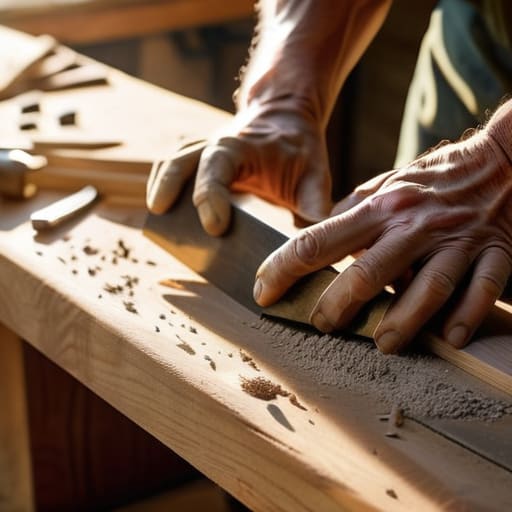
When you’re first finding your footing, there is this immense pressure to arrive at a “signature style” immediately. You feel like every sketch needs to be a manifesto. But if I’ve learned anything from twenty years of looking at my graveyard of rejected prototypes, it’s that your early work shouldn’t be about finding a voice; it should be about building foundational skills through sheer, repetitive friction. I spent my first three years just trying to understand why a joint would fail or why a certain timber felt wrong in the hand.
The real trick to navigating early career challenges isn’t about avoiding errors, but about how you document them. I keep a shelf of “failures”—the chairs with the impossible angles, the tables with the unstable legs—all tagged with the specific reason they died. Don’t view these as setbacks. Instead, treat them as the necessary data points for your eventual success. The goal isn’t to be right the first time; it’s to ensure that when you finally make a decision, you can look back and see exactly which path you didn’t take, and why that choice actually matters.
The Elegant Errors of Overcoming Beginner Mistakes
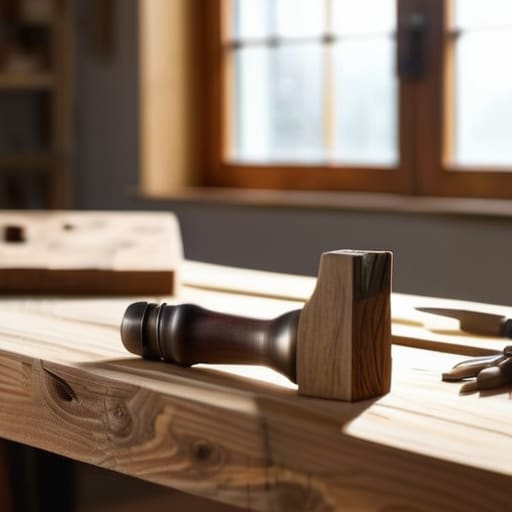
I have a shelf in the back of my studio dedicated to what I call the “ghosts.” They are the chair legs that were too spindly, the joinery that split under pressure, and the drawer fronts that looked nothing like the sketches. To a newcomer, these look like failures, but I’ve come to see them as the most honest part of the process. When you are building foundational skills, you have to accept that your first ten attempts will likely be wrong. The goal isn’t to avoid the error, but to ensure the error is informative.
The real trap isn’t making a mistake; it’s making the same mistake twice because you were too afraid to look closely at why it happened. Navigating early career challenges requires a certain kind of stubbornness—not the kind that forces a bad design to work, but the kind that refuses to let a bad design pass through the shop unnoticed. If you can learn to treat every botched prototype as a piece of data rather than a personal indictment, you’ll find that overcoming beginner mistakes becomes less about fixing errors and more about refining your intuition.
Why the Hard Way Was the Only Way Worth Taking
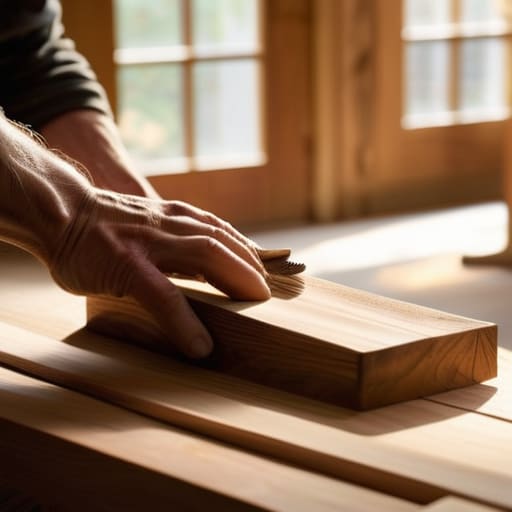
I used to think that finding a shortcut was the ultimate sign of intelligence. In my early years, I viewed the friction of manual labor—the wasted wood, the misaligned joinery, the sheer time lost to trial and error—as something to be bypassed. But looking back at the shelves in my studio, filled with those labeled failures, I realize that the friction was actually the point. You can’t download a sense of scale or an intuition for material tension. Building foundational skills isn’t about the efficiency of the final product; it’s about the callus you develop while trying to get there.
If I had taken the easy path, I would have ended up with a polished, shallow understanding of the craft. Navigating early career challenges taught me that the “hard way” is really just the way that forces you to pay attention. When you struggle with a piece, you are forced to confront the gap between your intention and the reality of the medium. That gap is where the real learning happens. The struggle isn’t a detour; it is the curriculum.
Building Foundational Skills Through Nearly Wrong Decisions
I have a shelf in the back of my studio, tucked behind the rolls of birch plywood, that serves as a graveyard for bad ideas. There is a chair leg that was too thin, a joint that failed under tension, and a series of drawer pulls that looked beautiful on screen but felt like cheap plastic in the hand. Most people see these as failures, but for me, they are the blueprints for building foundational skills. You don’t learn the physics of a cantilever by reading a manual; you learn it when the wood snaps because you were too arrogant to respect the grain.
Navigating early career challenges often feels like a series of expensive corrections. When I was first starting out, I thought efficiency was the goal. I wanted the cleanest line and the fastest build. But the real growth mindset for newcomers isn’t about how quickly you can reach a finished state; it’s about how much you can extract from a mistake. Every time I had to scrap a piece and start over, I wasn’t just losing material—I was gaining a visceral understanding of why the first way didn’t work. That tension, that moment of near-disaster, is where the actual expertise lives.
Navigating Early Career Challenges and the Temptation to Pivot
There is a specific kind of vertigo that hits about three years in. You’ve moved past the initial novelty, the tools feel familiar, and suddenly, the gap between your taste and your actual output feels like a canyon. This is where the temptation to pivot becomes almost physical. I remember sitting in my studio, staring at a series of failed joinery samples, thinking that maybe I wasn’t a furniture designer at all, but just someone who liked the idea of making things. It’s easy to mistake a plateau for a dead end.
When you are navigating early career challenges, the instinct is to run toward something new and shiny to escape the friction of being mediocre. But that pivot is often just a way of avoiding the hard work of overcoming beginner mistakes that have simply become more sophisticated. Instead of changing lanes, I learned to lean into the frustration. True growth isn’t found in the sudden leap to a new medium; it’s found in the slow, often boring process of refining the same stubborn decisions until they finally hold weight.
The Friction of Managing Expectations at the Start
When I first opened my own studio, I had this romanticized vision of a seamless workflow where every sketch translated perfectly into a prototype. The reality was much more abrasive. There is a specific kind of mental friction that occurs when your hands can’t yet execute what your eyes can see. I spent months managing expectations at the start, trying to reconcile the gap between my taste and my actual technical ability. You realize very quickly that the “flow state” people talk about is often interrupted by the stubborn refusal of a joint to seat correctly or a material to behave as intended.
It’s easy to mistake this friction for a lack of talent, but it’s actually just the tax you pay for entry. I spent a lot of time navigating early career challenges by trying to skip the messy middle, only to find that the mess is where the structural integrity of your character is built. If you try to bypass the frustration, you end up with shallow skills. You have to learn to sit with the discomfort of a mediocre result, because that gap—the space between where you are and where you want to be—is the only place where real progress actually happens.
Cultivating a Growth Mindset for Newcomers via Lessons Learned
I’ve spent a lot of time looking at the scrap pile in the corner of my studio. It’s a graveyard of chair legs that were too thin and joinery that failed under pressure, each one tagged with a handwritten note explaining the failure. To a novice, that pile looks like a collection of defeats. But to me, those pieces are the most honest part of my career. Cultivating a growth mindset for newcomers isn’t about maintaining a sunny disposition or pretending every mistake is a “learning opportunity”—that’s too much like corporate fluff. It’s about the grit required to look at a failed prototype and realize that the error wasn’t a detour, but the actual path to the solution.
When you are navigating early career challenges, the temptation is to hide the mess. You want to present a polished, finished object that suggests you knew exactly what you were doing from the first sketch. But true mastery comes from the friction of overcoming beginner mistakes in real-time. You have to learn to value the tension between what you intended to make and what the material actually allows you to build. That gap, that uncomfortable space where your plan falls apart, is exactly where the craft begins.
## On the Value of the Wrong Turn
Don’t mistake a clean process for a good result; I’ve spent more time learning from the prototypes I threw in the scrap bin than the ones I actually sent to production, because the real design happens in the moment you realize your first instinct was a lie.
Jonathan Marin
The Weight of the Decisions Left Behind
Looking back at the studio floor, through the piles of rejected joinery and the failed prototypes that clutter my shelves, I realize that none of this was about reaching a perfect final product. It was about the friction. We talked about the necessity of the hard way, the importance of managing those early, crushing expectations, and why the mistakes you make in the first year are actually your most valuable assets. If you try to bypass the struggle or smooth over the errors, you end up with something sterile. You have to embrace the inevitable pivots and the moments where you feel completely lost, because that is where the actual design happens. Success isn’t the absence of error; it is the accumulation of corrected mistakes.
So, if you are standing at that starting line, feeling the weight of everything you don’t yet know, don’t rush to find the “right” answer. Instead, look for the decision that makes you hesitate—the one that feels slightly uncomfortable or defies the easy path. That hesitation is where your unique voice lives. My advice is simple: don’t aim for the polished finish right away. Aim to make choices that are meaningful enough to regret. In the end, the most beautiful things I’ve ever built weren’t the ones that went according to plan, but the ones that survived the detour.
