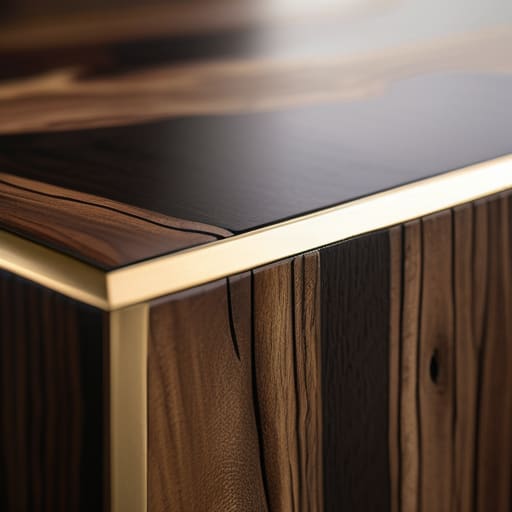
Metal and Wood and Their Different Natures
I can still smell the burnt linseed oil and the sharp, ozone tang of the grinder from that Tuesday in 2004. I was hunched over a workbench, staring at a prototype for a dining table that looked less like furniture and more like a collision between a shipyard and a lumberyard. I had spent three weeks trying to force a heavy blackened steel base to sit flush against a slab of white oak, only to realize that I wasn’t designing a piece; I was managing a fight. Most people think learning how to design with metal and wood together is about picking colors that match, but they’re wrong. It’s actually about understanding the physics of tension and the way two completely different temperaments can either harmonize or actively sabotage one another.
I’m not here to give you a list of “trending” material pairings from a lifestyle magazine. Instead, I want to talk about the friction that makes a piece feel real. I’ll share the specific, hard-won lessons I’ve gathered from twenty years of watching joints fail and grain split, focusing on the structural and aesthetic decisions that actually hold up. We’re going to look at how to balance weight, scale, and texture so your work feels intentional, not accidental.
The Friction of Choice How to Design With Metal and Wood Together
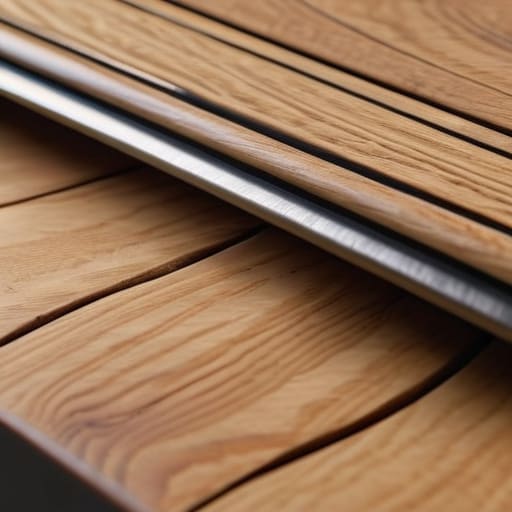
I spent three weeks staring at a single joint on a sideboard prototype that currently sits in my “failed” bin. I had intended to use a hidden mechanical fastener to marry a blackened steel leg to a white oak top, but the result felt sterile—like two strangers sharing an elevator. The mistake wasn’t in the math, but in the lack of dialogue between the materials. To get it right, you have to stop thinking about them as separate components and start thinking about balancing textures in furniture. If the metal is cold and unapologetically smooth, the wood needs to offer a grain that feels tactile, almost conversational.
It is a constant negotiation of physics, too. You can’t ignore material expansion and contraction; wood breathes, while steel sits stubbornly still. If you pin them together too tightly without accounting for that movement, the piece will eventually tear itself apart. I’ve learned that the most successful designs don’t just sit next to each other; they acknowledge their differences. Sometimes, that means letting a brass screw sit exposed, acting as a deliberate bridge between the organic and the industrial.
The Near Miss of Harmony Balancing Textures in Furniture
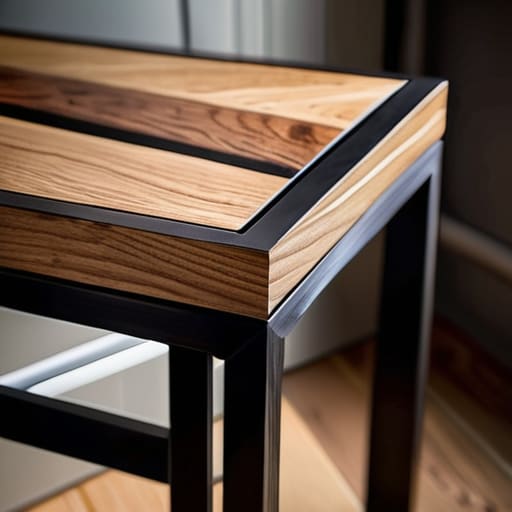
I have a shelf in the back of my studio dedicated to what I call “the ghosts”—prototypes that failed because they were too polite. There is a small side table there, a combination of blackened steel and white oak, that I nearly finished last autumn. It was too balanced. It was so perfectly symmetrical and smooth that it lacked any sense of struggle. I realized then that balancing textures in furniture isn’t about finding a middle ground where neither material dominates; it’s about managing the argument between them.
If the wood is too porous and the metal too brushed, they just sit next to each other like strangers in an elevator. I learned the hard way that you need a point of contact that feels intentional, almost violent. I ended up abandoning that specific joint because I hadn’t accounted for material expansion and contraction. The steel was too rigid, refusing to let the oak breathe as the seasons shifted. A good piece of furniture shouldn’t just look stable; it should look like it has survived the tension of its own making.
When Steel Claims the Room Industrial Interior Design Principles
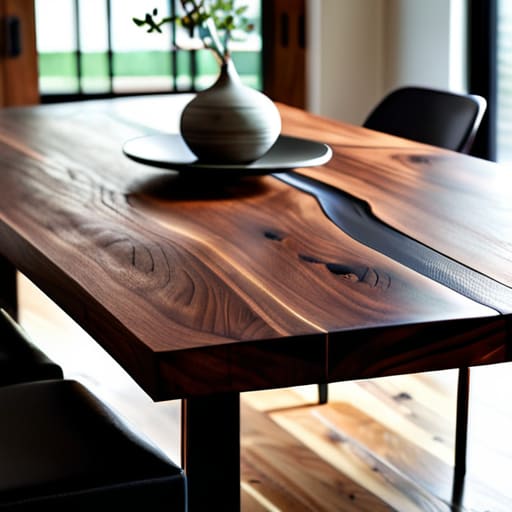
There is a specific kind of arrogance in steel. When you introduce a heavy, blackened steel frame into a room, it doesn’t just sit there; it commands the space, often threatening to swallow the softer elements whole. I remember a dining table I built last autumn where the legs were so unapologetically brutalist that the tabletop felt like an afterthought. To avoid that trap, you have to respect the hierarchy. True industrial interior design principles aren’t about making everything look like a factory floor; they are about managing the gravity of the metal so the wood can still breathe.
The secret lies in the transition points. If the steel is doing the heavy lifting, the timber needs to provide the warmth that prevents the room from feeling clinical. I often find myself obsessing over wood and metal color palettes—pairing a cold, brushed aluminum with a deeply honeyed white oak, for instance. It’s a delicate dance of temperature. You aren’t just matching colors; you are trying to find a way to make the rigid permanence of metal coexist with the living, breathing nature of grain.
The Risk of the Palette Wood and Metal Color Palettes
I remember a sideboard I built back in ’08—a heavy piece of reclaimed white oak paired with what I thought was a perfect matte black powder coating. On paper, it was the epitome of a modern rustic aesthetic. But in the studio light, the black felt like a void, swallowing the grain rather than framing it. It wasn’t a failure of material, but a failure of chromatic weight. When you’re working with wood and metal color palettes, you aren’t just picking shades; you’re managing how much light each surface is allowed to steal from the other.
The danger lies in the extremes. If your metal is too bright, too polished, it turns the wood into a mere backdrop, a secondary thought. If the wood is too dark, the metal can feel like an intrusive, skeletal afterthought. I’ve learned that the most successful pieces often live in the middle ground—where a brushed brass or a weathered bronze provides enough tonal bridge to let the organic warmth of the timber breathe. It’s about finding that narrow corridor where neither material feels like it’s shouting over the other.
A Dangerous Collision Material Expansion and Contraction
I have a shelf in the corner of my studio dedicated to what I call “the casualties of physics.” It’s filled with slabs of white oak that have buckled and steel brackets that have sheared, all because I ignored the fundamental reality of material expansion and contraction. When you marry wood to metal, you aren’t just combining two aesthetics; you are tethering two living, breathing organisms with entirely different heartbeats. Wood is temperamental—it breathes with the humidity, swelling and shrinking in a way that steel simply refuses to do.
I remember a dining table project from five years ago that nearly broke me. I had designed a sleek, continuous steel perimeter to cradle a massive walnut top, thinking it would anchor the piece. Instead, as the seasons shifted, the walnut fought the steel. The tension was so violent it actually compromised the structural joinery techniques I had relied on. I had to strip the piece back to the bones and redesign the mounting points to allow the wood to move independently. It was a humbling reminder: in this craft, you don’t command materials; you negotiate with them.
The Grace of the Joint Structural Joinery Techniques
I have a shelf in my studio dedicated to “failures”—mostly joints that looked beautiful on a CAD drawing but fell apart under the slightest stress. There is a specific kind of arrogance in assuming that a bolt and a hole are enough to marry two disparate materials. In my early years, I thought I could just drive a screw through oak into a steel plate and call it a day. I was wrong. To truly master structural joinery techniques, you have to respect the fact that wood is a living, breathing thing while metal is stubbornly, predictably static.
The real magic happens when you stop trying to force them into submission and instead design for their differences. I often find myself sketching ways to let the timber “float” within a metal chassis. If you don’t account for material expansion and contraction, the wood will eventually fight the steel, leading to split grains or warped frames. I once spent three weeks redesigning a simple dining table base because my first iteration ignored this tension; the result was a beautiful disaster. True craft isn’t about the connection itself, but about the space you leave for the materials to exist without conflict.
The Modern Rustic Aesthetic Where the Struggle Ends
I used to think the term “modern rustic” was just a marketing shorthand for anything that looked lived-in, but after two decades of prototyping, I’ve realized it’s actually about a very specific kind of truce. It’s the point where the cold, uncompromising geometry of steel finally stops fighting the organic, unpredictable grain of the timber. In my studio, I’ve seen too many pieces fail because they tried too hard to be “perfect.” A piece that hits that modern rustic sweet spot doesn’t look like it was manufactured; it looks like it was negotiated.
The real magic happens when you stop trying to force them into a seamless marriage and instead embrace the tension. You aren’t looking for a perfect blend, but rather a way of balancing textures in furniture so that the heavy, dark weight of a blackened iron leg doesn’t swallow the warmth of a reclaimed white oak top. It’s about finding that narrow ledge where the ruggedness of the material meets a refined silhouette. When you get it right, the struggle between the industrial and the natural doesn’t just end—it settles into something quiet and permanent.
The Ghost in the Grain
I have a drawer full of failed brass fittings that I can’t bring myself to throw away, mostly because they remind me that the hardest part of working with wood isn’t the cutting—it’s the moment you realize the metal you chose is trying to outshine the grain instead of dancing with it.
Jonathan Marin
The Ghost of the Alternative
Looking back through the stack of rejected prototypes in my studio, I see a recurring theme: the most successful pieces weren’t the ones that followed a perfect formula, but the ones that survived the inherent tension between materials. We’ve talked about the structural necessity of managing expansion, the visual weight of steel against oak, and the delicate dance of color palettes. But at the end of the day, designing with metal and wood isn’t about finding a way to make them disappear into one another. It is about respecting the friction of their coexistence. If you try to force them into a seamless, easy marriage, you usually end up with something sterile that lacks any sense of purpose.
My advice is to stop looking for the “correct” way to marry these two elements and start looking for the meaningful struggle. Don’t be afraid of the moment where the metal feels too cold or the wood feels too heavy; that’s usually where the real design begins. The most enduring furniture doesn’t hide its construction or its compromises. Instead, it celebrates the very decisions that nearly went the other way. When you finally stop trying to achieve a perfect, frictionless harmony, you might just find that the beautifully contested edge is exactly where the soul of the object resides.
