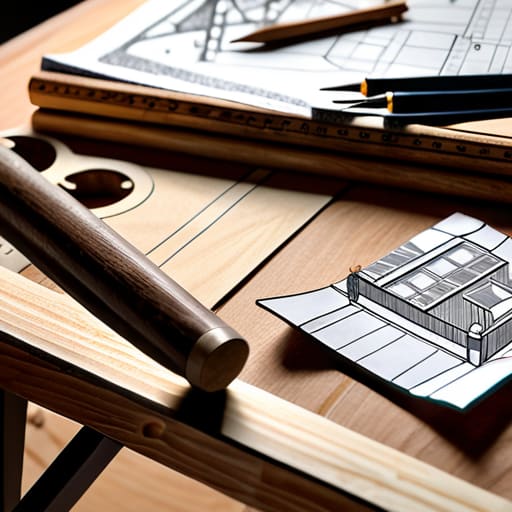
From Sketch to Full Size Mock Up
I spent most of yesterday morning digging through a cardboard box in the corner of my studio, pulling out a series of bent plywood joints that look more like modern art than functional components. They are all failures, of course—scraps of wood that didn’t quite hold the weight or looked too aggressive under a spotlight. Most design blogs will try to sell you a polished, linear fantasy about how a piece of furniture gets designed, complete with mood boards and effortless “eureka” moments. But the truth is much messier. Real design isn’t found in the clean lines of a finished render; it’s found in the friction between what you intended to make and what the material actually allows you to do.
I’m not here to give you a lecture on aesthetics or a sanitized step-by-step guide. Instead, I want to pull back the curtain on the actual labor of the process. I’ll show you the mistakes, the expensive wrong turns, and the near misses that actually define a good object. We’re going to talk about design as a series of calculated constraints, moving past the myth of inspiration to look at how a piece of furniture gets designed through grit and decision-making.
The Ghost in the Sketch How a Piece of Furniture Gets Designed
I have a shelf in my studio, tucked behind the letterpress, that serves as a graveyard for ideas. It is filled with bent plywood that failed its stress test and joinery that looked elegant on paper but felt clumsy in the hand. This is the reality of the industrial design workflow; it isn’t a straight line from a spark of genius to a polished product. It’s a series of corrections. When I sit down with a sketchbook, I’m not looking for the “correct” line. I’m looking for the tension—the point where a silhouette feels almost too aggressive, or a curve feels just shy of being comfortable.
The transition from a loose sketch to something tangible usually happens during the messy middle of furniture prototyping stages. This is where the math of ergonomic furniture principles meets the stubborn reality of wood grain and steel thickness. You might see a digital render and think the design is settled, but I’m usually thinking about the moment we almost pivoted to a different leg taper because the original felt too static. The design isn’t found in the lines that work; it’s found in the negotiation between what I wanted and what the material allowed.
The Industrial Design Workflow Where the First Wrong Turns Happen
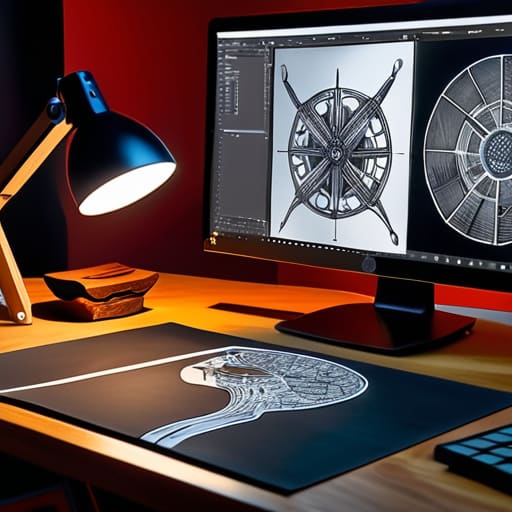
Once the initial sketches lose their romantic haze, the reality of the industrial design workflow sets in, and it’s rarely a straight line. This is where the math starts to fight the intuition. I remember sitting in front of a monitor for three days straight, lost in the weeds of CAD modeling for furniture, trying to reconcile a silhouette I loved with the brutal physics of joinery. You think you’ve found the perfect curve, but then the software tells you that the wood will split under its own weight, or the center of gravity is so off the piece will tip if a cat breathes on it.
It’s a series of controlled failures. We move through the various furniture prototyping stages not to prove we are right, but to find out exactly where we are wrong. I have a shelf in my studio dedicated to this: a collection of bent plywood scraps and failed CNC routings. Each one represents a moment where the material refused to cooperate with my ego. You don’t truly understand a piece until you’ve wrestled with the tension between a beautiful idea and the uncompromising reality of how things are actually built.
Cad Modeling for Furniture the Beautiful Math of Near Mistakes

There is a specific kind of tension that settles in when you move from the loose, forgiving lines of a sketchbook into the rigid, unforgiving geometry of CAD modeling for furniture. In a sketch, a curve can be whatever I need it to be; in the software, every millimeter is a commitment. I spend hours staring at a digital joint, obsessing over a radius that looks perfect on screen but feels fundamentally “off” in my gut. It’s a strange, clinical way to work, but it’s where the math starts to fight your intuition.
I often find myself caught in a loop of micro-adjustments, chasing a silhouette that feels balanced. Most people think the computer is there to find the “right” answer, but for me, it’s more about documenting the near misses. I’ll spend an entire afternoon tweaking a taper, only to realize that the version I discarded twenty minutes ago actually had more soul. These digital iterations are just as vital as the physical furniture prototyping stages that follow; they are the quiet, invisible battleground where the final form is either won or lost.
The Weight of Choice Material Selection in Design Dilemmas
I have a shelf in the back of my studio dedicated to what I call “material corpses.” It’s a collection of walnut offcuts, failed polymer resins, and bent plywood that snapped under too much tension. People think material selection in design is about choosing what looks good in a render, but for me, it’s a wrestling match with physics. Last month, I spent three days debating between a solid ash frame and a bentwood alternative for a new lounge chair. The ash offered a structural honesty that felt right, but the weight was a constant, nagging problem that threatened the entire ergonomic furniture principles I’d set out to achieve.
Moving from concept to manufacturing is where these debates get expensive. You can tweak a line in CAD all day, but once you commit to a material, you’re locked into its temperament. I remember nearly choosing a heavy steel base for a side table, only to realize mid-prototype that it would make the piece feel unforgivingly anchored rather than elegant. That decision—the one that almost happened—is what actually defines the object’s soul.
Furniture Prototyping Stages Testing the Limits of a Bad Idea
There is a specific kind of heartbreak that only happens in the workshop. You move from the clean, mathematical perfection of CAD modeling for furniture into the messy reality of physical form, and suddenly, the math stops caring about human comfort. I have a shelf in my studio dedicated to these failures—cardboard mockups that collapsed under their own weight or plywood joints that looked elegant on a screen but felt utterly wrong in the hand. These are the essential furniture prototyping stages where the theory of design meets the stubbornness of gravity.
It isn’t about proving you were right; it’s about finding exactly where you were wrong. I often spend days wrestling with a scale model, trying to balance ergonomic furniture principles against the aesthetic I initially promised. You realize that a curve which looked “dynamic” in a digital render actually creates a pressure point that makes a person want to stand up immediately. This is the grit of the industrial design workflow: moving from concept to manufacturing by failing, repeatedly and loudly, in the safety of a workshop before the first real piece of timber is ever cut.
Ergonomic Furniture Principles the Unseen Struggle With Human Form
There is a specific kind of madness that sets in when you realize a chair looks stunning in a render but feels like a torture device in reality. This is where the abstract beauty of CAD modeling for furniture hits the hard, unforgiving wall of human anatomy. You can spend weeks perfecting the silhouette, chasing a specific line or a sense of lightness, only to realize you’ve ignored the sacrum or the way a person actually shifts their weight when they’re tired. It is a humbling collision between the ego of the designer and the stubborn reality of the skeletal system.
I often look back at my graveyard of rejected prototypes—the ones sitting in the corner of my studio—and see the exact moment where I prioritized aesthetics over comfort. We talk about ergonomic furniture principles as if they are a set of polite suggestions, but in practice, they are a series of brutal compromises. You aren’t just designing an object; you are negotiating with the way a body occupies space. The goal isn’t to make something that looks good in a catalog, but to make something that disappears the moment someone actually sits down.
From Concept to Manufacturing the Final Victory Over Failure
There is a specific kind of tension that exists when you move from the controlled environment of the studio into the chaotic reality of the factory floor. You’ve navigated the industrial design workflow, survived the grueling furniture prototyping stages, and finally, you think you’re ready. But the transition from concept to manufacturing is rarely a victory lap; it is more of a negotiated peace treaty. The machine doesn’t care about the poetic curve of a hand-drawn sketch; it cares about tolerances, tool paths, and the brutal physics of mass production.
I remember a walnut sideboard I spent six months perfecting. On paper, the joinery was a triumph of geometry. But once the first production run hit the CNC machines, the grain direction fought the bit, and the elegant silhouette began to warp. It was a humbling reminder that design isn’t just about making something look right—it’s about surviving the translation. You don’t truly finish a piece until you’ve accounted for every way the material might try to betray your original intent.
The Architecture of Regret
People tend to look at a finished chair and see a singular vision, but when I look at it, I see a graveyard of better-sounding ideas that simply didn’t work. A design isn’t born from a moment of pure inspiration; it’s what remains after you’ve systematically killed off every version of it that was too fragile, too expensive, or too arrogant to actually exist in a living room.
Jonathan Marin
The Anatomy of a Final Choice
When you look at a finished piece in a showroom, you are seeing the survivor of a thousand small executions. We’ve traced the path from that first, shaky sketch to the rigid math of CAD, through the grueling trial of physical prototypes and the unforgiving reality of manufacturing constraints. It is a process defined not by a straight line toward perfection, but by a series of calculated retreats. Every joint that holds, every curve that feels right against a human spine, and every material that survives the production line is essentially a victory over the better ideas that failed. Design isn’t about finding the “right” answer; it’s about surviving the wrong ones until only the most resilient remains.
I often find myself looking at the graveyard of rejected prototypes in the corner of my studio—the bent wood, the misaligned dowels, the failed joinery. They aren’t failures to me; they are the necessary friction that polishes the final object. We tend to treat design as a pursuit of inspiration, but it is actually a discipline of constraints. If you want to understand the soul of a chair or a table, don’t just look at the grain of the wood or the elegance of the silhouette. Look for the ghost of the mistake that almost happened. That is where the real story lives.
