Repetition With One Deliberate Break
I was standing in my studio last Tuesday, staring at a pile of discarded veneer samples that most people would call trash, but I call my necessary failures. I was trying to figure out how to design a repeating element for a new sideboard, and I kept falling into the trap of making it too “perfect”—that sterile, mathematical precision that looks great in a software render but feels utterly dead once you actually touch the wood. Most design tutorials will tell you that rhythm is about symmetry and software tools, but they forget that a pattern is a living thing that has to survive the physical constraints of the material it lives on.
I’m not here to give you a lecture on geometric algorithms or a list of fancy plugins. Instead, I want to talk about the friction between the idea and the execution. I’m going to share what I’ve learned from twenty years of making things that actually have to exist in a room, focusing on the messy, tactile decisions that make a pattern feel intentional rather than accidental. We’ll look at how to design a repeating element by embracing the tension of the near-miss, ensuring your work has a soul instead of just a sequence.
The Near Miss How to Design a Repeating Element
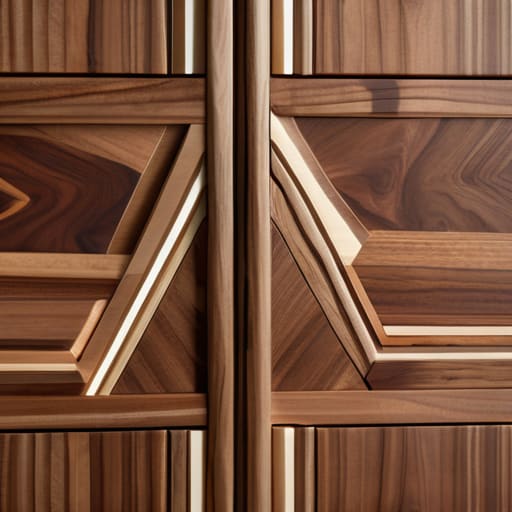
I remember a walnut sideboard I was working on back in 2008. I had designed this intricate inlay, a series of interlocking lines that felt sophisticated, but the moment I saw the first physical sample, it felt suffocating. I almost doubled down on the complexity, thinking more detail equaled more value. Instead, I stripped it back to a single, repeating geometry. It was a hard lesson in alternating rhythm in composition; if the pulse of the pattern is too frantic, the eye never finds a place to rest.
When you are creating seamless patterns, the temptation is to fill every void. We treat white space like a mistake to be corrected rather than a structural necessity. In my studio, I have a drawer full of these “over-designed” scraps. They taught me that a successful repeat isn’t about the density of the motifs, but about how they guide the viewer through the surface. You have to find that tension between the individual shape and the larger flow, ensuring the visual hierarchy doesn’t collapse into mere wallpaper noise.
The Tension Between Geometric Pattern Construction and Chaos
There is a specific kind of madness that sets in when you are deep into the process of geometric pattern construction. On one hand, you have the mathematical certainty of the grid—the safety of the repeat, the comfort of the calculated angle. On the other, there is this nagging feeling that if you follow the rules too closely, you aren’t designing anything at all; you’re just performing an autopsy on a shape. I’ve spent many late nights staring at a screen or a drafting table, feeling that friction between the desire for order and the need for something to actually breathe.
If you lean too hard into the principles of design repetition, the result is often sterile. It feels like a factory floor rather than a piece of craft. But if you let the chaos win, you lose the ability to create a cohesive surface. The real work lies in managing that alternating rhythm in composition. You want the eye to dance, not to trip. I find that the most successful patterns are those that feel like they are constantly on the verge of breaking apart, held together by nothing more than a very disciplined, very intentional tension.
Choosing the Motif That Almost Didnt Make the Cut
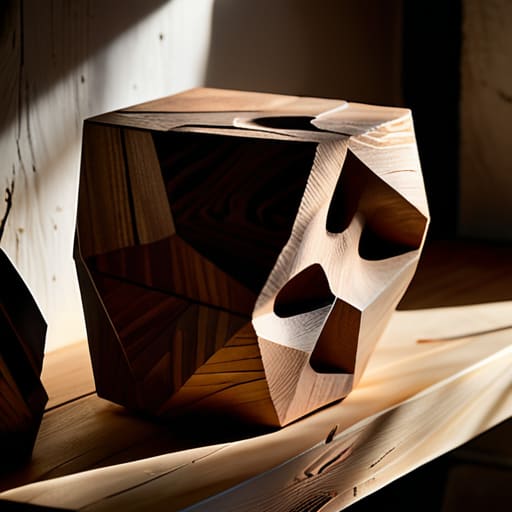
I have a shelf in the back of my studio—a graveyard of sorts—where the “almosts” live. There is a small, hand-carved wooden module sitting there right now, a jagged, aggressive little shape that I nearly used for a series of upholstered lounge chairs. It was striking, certainly, but it lacked the alternating rhythm in composition required to make a pattern feel lived-in rather than just loud. I remember staring at it for two hours, convinced that its sheer audacity was what the collection needed, before realizing it would eventually exhaust the eye.
In the end, I pivoted to something much quieter, a softened derivation of that original shape. It felt like a retreat at first, a surrender to the safety of the expected. But as I began creating seamless patterns from this new, subdued motif, I realized the tension hadn’t disappeared; it had just moved inward. The strength of the final design didn’t come from the shape itself, but from the ghost of that rejected, sharper version that informed its proportions. That is the secret: the best work often carries the dna of its own near-misses.
Designing Motifs for Textiles the Pivot Point of Success
When I moved from furniture to thinking about how a pattern sits on a drape, I realized that designing motifs for textiles is less about the drawing itself and more about how that drawing survives being multiplied. In my studio, I have a drawer full of textile sketches that failed because they were too “loud.” They lacked a sense of visual hierarchy in pattern design, meaning once they started repeating, the eye had nowhere to rest. A motif shouldn’t just be a pretty shape; it has to function as a building block that understands its own boundaries.
I remember working on a linen upholstery sample last autumn. I had this intricate, hand-drawn botanical that I was convinced would be the centerpiece. But as I began the process of creating seamless patterns, the motif became a claustrophobic mess. It fought against the fabric. I had to pivot, stripping the detail back until the shape could actually breathe within an alternating rhythm in composition. It wasn’t the “perfect” drawing I had initially envisioned, but it was the one that actually worked when it hit the loom.
Mastering the Subtle Art of Creating Seamless Patterns
There is a specific kind of quiet frustration that comes with the technical side of creating seamless patterns. You can have the most evocative motif in the world, but if the edges of your tile don’t shake hands perfectly, the illusion breaks. I remember a particular walnut veneer inlay I was working on years ago; the grain transition was so jarring it felt like a physical hiccup in the wood. It taught me that true mastery isn’t about the complexity of the shape, but about the invisible architecture that holds the repetition together.
To get it right, you have to stop looking at the motif as a standalone hero and start seeing it as a piece of a larger machine. This is where the principles of design repetition really test your patience. You aren’t just tiling a shape; you are managing the eye’s journey across the surface. I often find myself obsessing over the alternating rhythm in composition, ensuring that no two identical clusters sit too close together. If the pattern feels too predictable, it’s boring; if it’s too chaotic, it’s noise. The sweet spot lies in that subtle, almost imperceptible flow.
Visual Hierarchy in Pattern Design the Unseen Decision
I have a shelf in my studio dedicated to what I call “the quiet failures”—prototypes that were technically perfect but lacked a soul. Usually, the culprit wasn’t the geometry or the motif itself, but a total lack of direction. In pattern design, you can get so caught up in the math of geometric pattern construction that you forget a pattern needs to breathe. If every element is screaming for attention at the same volume, the eye just bounces off the surface like light off cheap laminate. You need a hierarchy, an invisible roadmap that tells the viewer where to land and where to wander.
I remember working on a linen upholstery series where I initially made every motif the same scale. It was a disaster; it looked like static on an old television. I had to pivot, introducing a larger, grounding element to anchor the composition, which allowed the smaller details to act as mere texture. It’s about establishing an alternating rhythm in composition—giving the eye a place to rest so that the more intricate details actually have the space to be discovered. Without that tension between the dominant and the subordinate, you aren’t designing a pattern; you’re just making noise.
Finding Beauty in Alternating Rhythm in Composition
I remember sitting in my studio last Tuesday, staring at a swatch of linen that felt entirely too predictable. It was a textbook application of the principles of design repetition—predictable, safe, and utterly lifeless. When you are designing motifs for textiles, there is a massive temptation to lean into a steady, metronomic beat. But a pattern that never breathes is just wallpaper for people who don’t want to be disturbed. I realized I had fallen into the trap of making it too easy for the eye to rest.
The fix wasn’t to abandon the structure, but to introduce a slight, intentional hesitation. I started playing with alternating rhythm in composition, swapping a heavy, solid motif for a lighter, more ethereal one every third iteration. It’s a delicate tightrope walk; if you deviate too much, you lose the sense of order, but if you stay too close to the grid, you lose the soul. I ended up choosing a sequence that felt almost unsettling at first, a rhythmic hiccup that forces the viewer to actually engage with the surface rather than just glancing past it.
The Ghost in the Pattern
A repeating element shouldn’t feel like a mathematical certainty; it should feel like a series of controlled accidents. The moment you achieve perfect, sterile repetition, you’ve stopped designing and started calculating—and the eye always knows when it’s being lied to.
Jonathan Marin
The Weight of the Final Choice
Looking back at this process, I realize that designing a repeating element isn’t really about the math of the grid or the perfection of the seamless loop. It’s about managing the friction between your initial impulse and the constraints of the medium. We’ve talked about the tension of chaos, the hierarchy of the motif, and that crucial moment of rhythm that keeps a pattern from feeling stagnant. Ultimately, a successful repeat is a series of calculated compromises. You aren’t just arranging shapes; you are deciding which visual voices to amplify and which to quieten so the whole composition doesn’t collapse under its own weight. It is the disciplined navigation of these tiny pivots that separates a decorative afterthought from a deliberate piece of design.
As I clear my workbench tonight, I’m reminded that the most important part of any pattern isn’t the one that looks perfect on the screen. It’s the ghost of the version you almost made—the one that was perhaps too safe, too predictable, or too loud. Don’t fear the discarded iterations or the prototypes that failed to find their rhythm. Those “failures” are actually the blueprints for your intuition. Design isn’t a lightning bolt of inspiration; it is the slow, methodical work of making decisions, one stitch or one line at a time, until the tension finally settles into something honest. Keep your rejected scraps; they are the truest map of your progress.
